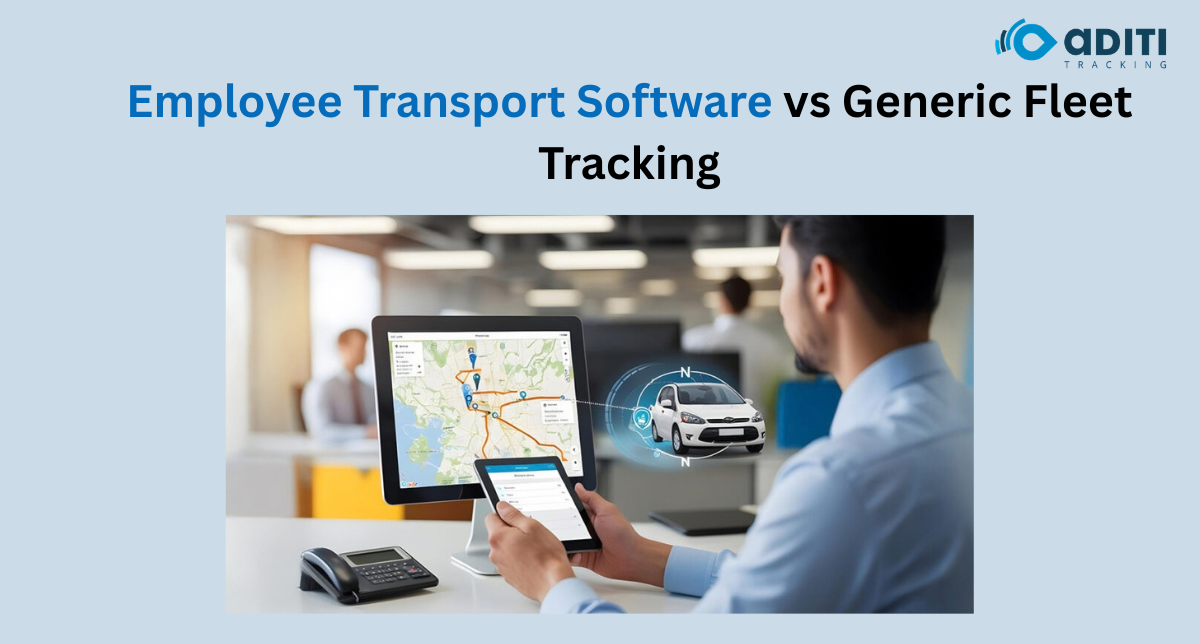
A fleet manager and an HR team can look at the same office cab and need completely different information. Fleet operations may focus on vehicle location, routes and movement. HR needs to understand whether employees are being picked up as planned and whether transport operations are running smoothly. This is why employee transport management software serves a different purpose from generic fleet tracking.
The difference becomes clearer when we look at an actual employee commute rather than the vehicle alone.
Generic fleet tracking shows where a vehicle is, but HR needs to know how employees’ trips, shifts and pickups are running. Employee transport management software connects vehicle location with the commute itself, so HR works with trip data, not just a map.
At 9 AM, HR Is Not Asking “Where Is Cab 17?”
Imagine an organisation arranging daily transport for hundreds of employees.
At the start of a shift, one cab is running late. Three employees are waiting at different pickup points. Another employee has changed their transport requirement.
A generic GPS system can show where the cab is.
Useful? Yes.
Enough for HR? Not necessarily.
The HR or transport administration team may need answers to questions connected directly to employees and their trips. Vehicle location becomes one piece of a larger process rather than the complete picture.
That is the fundamental difference between generic tracking and transport management software designed around employee mobility.
Generic Fleet Tracking Starts With the Vehicle
Most standard fleet tracking systems naturally treat the vehicle as the primary unit.
The system may help answer:
- Where is the vehicle?
- Which route has it travelled?
- Where did it stop?
- How long was the journey?
- Did it leave a defined geographical area?
These questions matter for many commercial fleets.
A logistics company transporting goods, for example, may primarily need to monitor trucks, routes and deliveries.
Employee transportation changes the centre of attention. The vehicle still matters, but the passenger becomes equally important.
Employee Transport Starts With the Commute
Think about an employee called Priya who works an evening shift.
From HR’s perspective, knowing the cab’s registration number and current location is only part of the requirement. The real operational process involves Priya’s scheduled pickup, assigned vehicle, journey and drop.
Multiply that by hundreds or thousands of employees working across different shifts and locations, and the complexity grows quickly.
This is why employee transport management software needs to connect transport operations with employee movement.
HR and administrative teams may need visibility around:
- Employee trip requirements
- Pickup and drop planning
- Vehicle allocation
- Routes
- Shift-based transportation
- Trip status
- Employee communication
- Transport-related records
The data is organised around getting people from one location to another, not simply tracking vehicles.
Route Planning Means Something Different for Employee Transport
A commercial vehicle may have a fixed delivery route. Employee transportation can be more dynamic.
Employees may live across different parts of a city. Their office timings may vary. Different shifts can require different pickup and drop arrangements.
This makes route planning an operational challenge.
Sending multiple cabs along poorly planned routes can increase travel time and make transport harder to manage. On the other hand, grouping employee requirements logically can support more organised trips.
A dedicated transport management software system is therefore about managing the complete transport workflow rather than placing vehicle icons on a map.
HR Also Needs a Better Connection With Employees
There is another major difference that is easy to overlook: communication.
In logistics, the operations manager may be the primary person monitoring the fleet. Employee transportation involves passengers who also need information.
An employee may want to know whether a cab has been assigned or where the assigned vehicle is.
Without a connected system, these questions can turn into phone calls and messages between employees, drivers, transport coordinators and HR teams.
As the workforce grows, managing such communication manually becomes increasingly difficult.
Technology can help bring trip information into a more structured process.
Reports Need to Answer HR Questions, Not Only Fleet Questions
Data becomes useful only when it helps someone make a decision.
A standard fleet report might tell an operations manager how many kilometres a vehicle travelled.
HR may need to understand employee transport operations from another angle.
For example:
- How are trips being managed across shifts?
- How are vehicles being utilised for employee transportation?
- What transport activity took place during a particular period?
- Are there recurring operational issues that need attention?
This is another reason employee transport management software should not be treated as ordinary GPS tracking with a different name.
The users, workflows and decisions are different.
GPS Still Matters, But It Becomes Part of a Larger System
None of this makes GPS unnecessary.
Location tracking remains important because employees and administrators need visibility into vehicle movement. The difference is that GPS becomes one component of the employee transportation process.
Generic fleet tracking essentially says:
“Here is your vehicle.”
Employee-focused transport management software needs to help answer:
“How is today’s employee transport operation running?”
That shift from vehicle visibility to trip management is what separates the two approaches.
Employee Mobility Needs Its Own Technology Approach
Businesses should avoid choosing an employee transportation platform based only on GPS capabilities. The better starting point is to examine how employees are scheduled, assigned, transported and kept informed throughout their commute.
Aditi Tracking provides employee transport management solutions designed to help organisations manage workforce transportation alongside vehicle tracking. Businesses looking to organise employee commute operations can explore Aditi Tracking’s solution according to their workforce and transport requirements.
Still fielding “Where is the cab?” calls all morning?
See how CommutePulse gives HR and transport teams one place to manage rosters, trips and employee ride updates.
See CommutePulse in Action or Call +91 96373 96373
FAQs
1. What is employee transport management software?
Employee transport management software helps organisations manage employee transportation activities such as trip planning, vehicle allocation, routes and transport-related information.
2. How is employee transport software different from GPS tracking?
GPS primarily provides vehicle location and movement information. Employee transport systems connect vehicle visibility with employee commute and trip-management requirements.
3. Can transport management software help manage different shifts?
Employee-focused systems can support transportation requirements involving different employee schedules and shifts, depending on the available platform features.
4. Is GPS still required for employee transportation?
GPS remains useful for monitoring vehicle movement. However, employee transport operations usually involve additional requirements beyond knowing vehicle location.
5. Who can benefit from employee transport systems?
Organisations that arrange regular transportation for employees, particularly across multiple routes or shifts, may benefit from a structured system for managing those operations.



 Smart Fleet
 Cool Bus
 Clicktask
 CommutePulse
 Wastetrail