
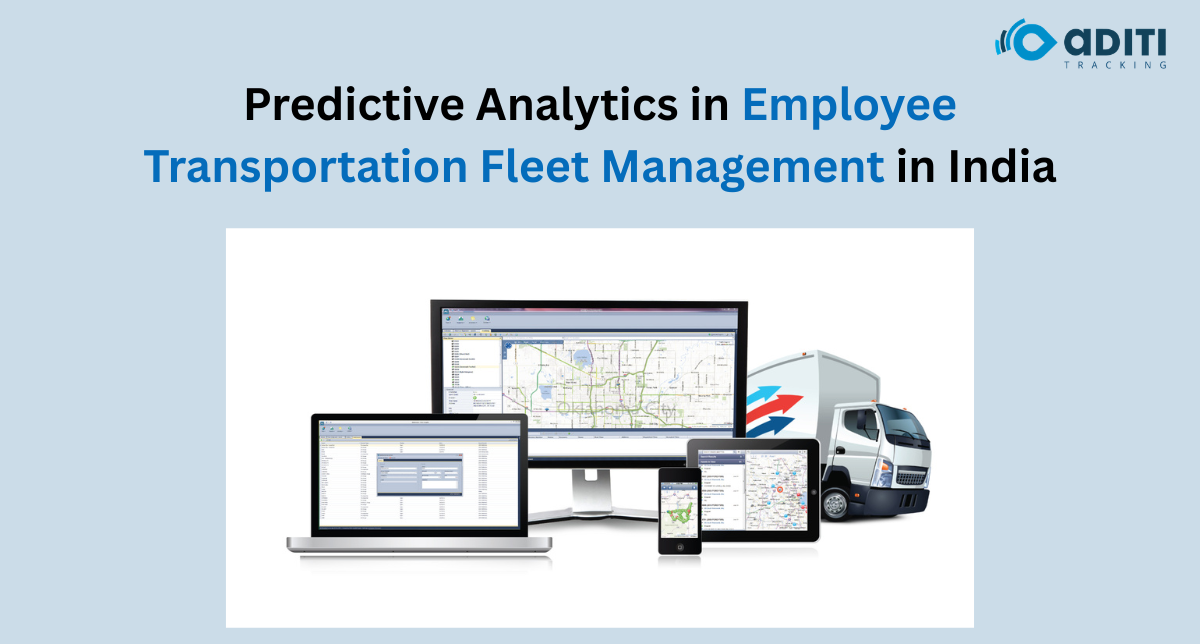
Employee transportation in India has moved far beyond basic pickup and drop-off coordination. Large enterprises today manage complex movement networks involving multiple shifts, distributed workforces, third-party fleet vendors, safety expectations, and constantly changing traffic conditions. In this environment, employee transportation fleet management is increasingly becoming a data-driven operational function rather than only a logistics responsibility.
This shift is where predictive analytics is beginning to play a major role.
For years, transport teams operated reactively. A delay happened first. A route disruption occurred first. A vehicle issue surfaced first. Only then did operational teams step in to solve the problem.
That model no longer works efficiently at scale.
Modern enterprises are now looking at transportation systems differently. They want visibility before disruptions happen. They want operational forecasting instead of operational firefighting. Predictive analytics is helping organisations move in that direction.
Why Traditional Fleet Operations Are Under Pressure
Managing employee transportation across Indian cities is not straightforward.
Traffic conditions fluctuate unpredictably. Weather disruptions affect commute timings. Infrastructure work changes route behaviour. Shift schedules evolve continuously. Employee attendance patterns also influence transportation demand in ways many companies underestimate.
When transportation systems depend heavily on manual coordination, the result is often:
- Delayed pickups
- Inefficient route planning
- Vehicle underutilisation
- Higher fuel consumption
- Increased escalation handling
- Reduced operational visibility
In smaller setups, these inefficiencies may appear manageable. But in enterprise-scale environments handling hundreds or thousands of employee trips every day, small inefficiencies compound very quickly.
This is one reason predictive intelligence is becoming more relevant in employee transportation fleet management across India.
Predictive Analytics Is Changing How Decisions Are Made
Predictive analytics works by analysing historical and real-time operational data to identify patterns and forecast likely outcomes.
In transportation environments, this allows organisations to detect operational risks earlier instead of waiting for issues to escalate.
For example, systems can identify:
- Routes are consistently affected during certain hours
- Vehicles showing patterns linked to maintenance risks
- Driver allocation inefficiencies
- High-delay pickup zones
- Fuel usage abnormalities
- Vendor performance gaps
- Employee demand fluctuations across shifts
The objective is not simply to collect more data.
The objective is to improve decision-making quality.
Transport operations generate large amounts of information every day, but without structured analysis, most of that information remains underutilised. Predictive systems help convert operational data into actionable planning inputs.
Transportation Delays Impact More Than Commute Timings
Many organisations still treat employee transport as a backend support function.
In reality, transportation reliability directly affects workforce continuity.
A delayed pickup can impact:
- Shift handovers
- Attendance consistency
- Employee punctuality
- Customer-facing operations
- Production timelines
- Workforce morale
This becomes especially important in industries such as:
- IT and ITES
- BPO operations
- Manufacturing
- Healthcare
- Logistics
- Enterprise business parks
In these sectors, transportation stability is closely linked with operational continuity.
That is why enterprises are increasingly investing in systems that improve predictability inside employee transportation fleet management operations.
The Shift from Monitoring to Forecasting
Traditional fleet systems mainly focused on tracking current movement.
Managers could see where a vehicle was located, whether a route was active, or whether a delay had occurred.
Predictive systems go a step further.
They help organisations anticipate:
- Which routes are likely to experience delays
- Which vehicles may require servicing soon
- Which operational zones create repeated inefficiencies
- Which schedules need optimisation
- Which patterns increase transportation costs
This creates a more proactive operational environment.
Instead of reacting after disruptions affect employees, transport teams can take preventive action earlier.
Over time, this improves:
- Fleet utilisation
- Route efficiency
- Scheduling consistency
- Resource allocation
- Operational transparency
It also helps reduce administrative pressure on transport coordination teams.
Fuel Efficiency and Cost Control Are Becoming Critical
Transportation budgets have become a growing concern for many enterprises in India.
Rising fuel costs, vendor expenses, idle trips, route duplication, and inefficient scheduling all contribute to operational pressure.
Predictive analytics helps organisations optimise resources more effectively through:
- Better route planning
- Reduced unnecessary vehicle movement
- Smarter trip allocation
- Improved shift demand forecasting
- Early maintenance scheduling
- Lower disruption-related costs
In large transportation networks, even modest optimisation improvements can create significant long-term operational savings.
This is why predictive technologies are increasingly being viewed as operational investments rather than optional digital upgrades.
Safety Expectations Are Also Evolving
Employee transportation today is not measured only by punctuality.
Enterprises are also expected to maintain stronger operational oversight around:
- Route adherence
- Driver accountability
- Emergency response readiness
- Late-night transportation visibility
- Compliance monitoring
Predictive systems improve visibility across these operational layers by identifying irregular patterns earlier and supporting better transport governance.
For organisations operating across multiple cities and large employee bases, this level of operational intelligence is becoming increasingly important.
Conclusion
Employee transportation operations are becoming more dynamic, data-heavy, and operationally sensitive across modern Indian enterprises. As businesses scale across cities, shifts, and workforce models, relying only on reactive coordination creates long-term inefficiencies that are difficult to sustain.
This is where intelligent fleet visibility becomes critical.
Aditi Tracking’s CommutePulse helps enterprises build smarter employee transportation fleet management systems through real-time tracking, operational analytics, route visibility, predictive monitoring, and scalable fleet intelligence solutions designed for modern business environments.
From improving transport coordination to enhancing operational efficiency and workforce mobility planning, data-driven fleet management is gradually becoming an essential part of enterprise transportation strategy.
FAQs
1. What is predictive analytics in employee transportation fleet management?
Predictive analytics uses historical and real-time transportation data to identify patterns, forecast operational risks, and improve decision-making. In employee transportation fleet management, it helps organisations optimise routes, reduce delays, and improve fleet efficiency.
2. Why are Indian enterprises adopting predictive transportation systems?
Indian enterprises are managing increasingly complex transportation operations because of traffic congestion, distributed workforces, multiple shifts, and rising operational costs. Predictive systems help improve visibility, planning accuracy, and transport coordination at scale.
3. How does predictive analytics improve fleet efficiency?
Predictive systems can identify:
- Route inefficiencies
- High-delay zones
- Vehicle maintenance risks
- Fuel consumption abnormalities
- Scheduling gaps
This helps transport teams take preventive action before operational issues escalate.
4. Which industries benefit the most from predictive fleet management?
Industries with large employee transportation networks benefit significantly, including:
- IT and ITES
- BPO operations
- Manufacturing
- Healthcare
- Logistics
- Enterprise business parks
These sectors depend heavily on transportation reliability for workforce continuity.
5. Can predictive analytics help reduce transportation costs?
Yes. Predictive technologies help organisations optimise routes, reduce unnecessary vehicle movement, improve trip allocation, and plan maintenance more efficiently. Over time, this can help reduce operational inefficiencies and transportation-related expenses.


 Smart Fleet
 Cool Bus
 Clicktask
 CommutePulse
 Wastetrail