
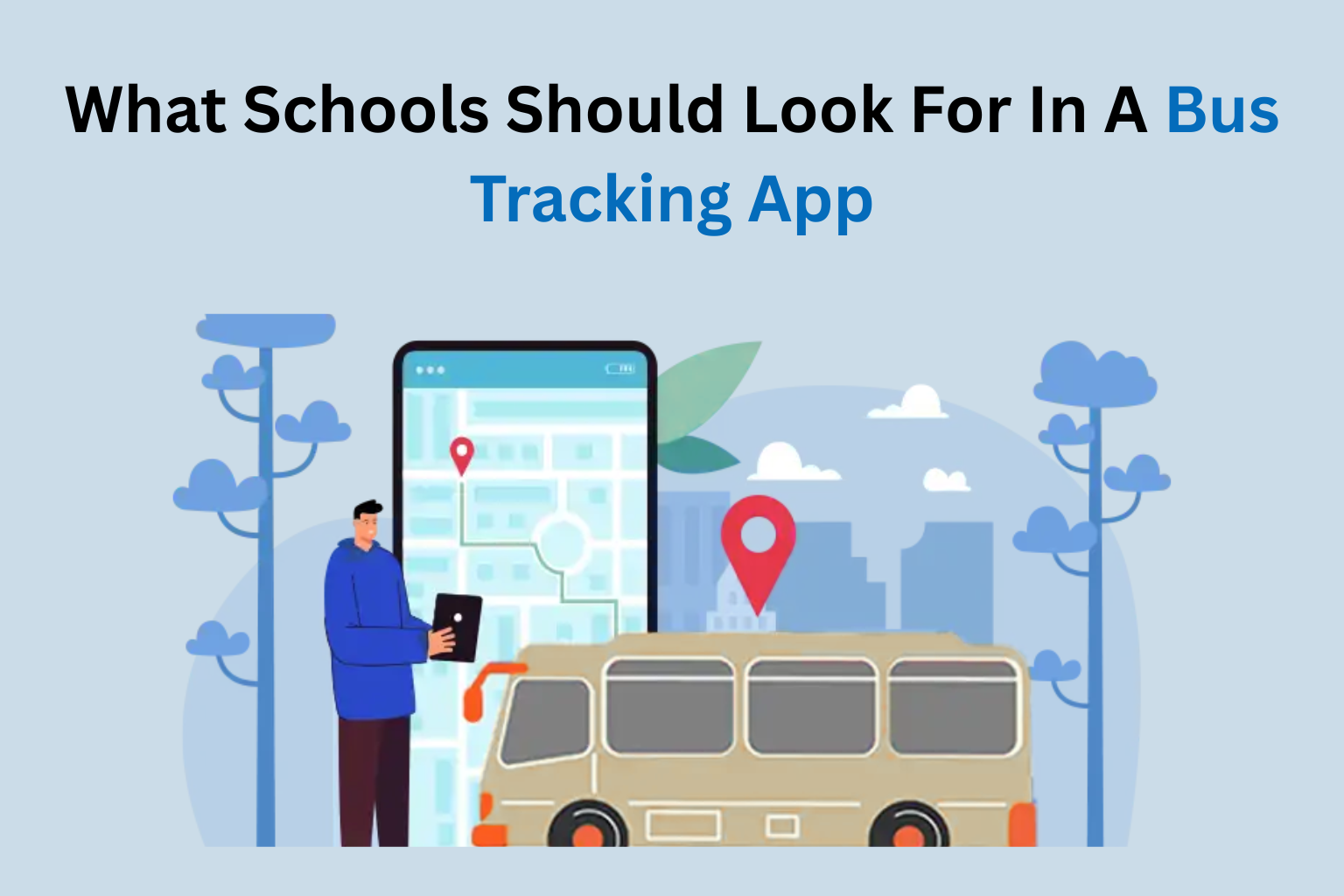
Most schools that decide to invest in a bus tracking app make the same mistake.
They look at the demo. The map looks clean. The interface is responsive. The sales person shows a parent notification going out on cue. The school signs the contract.
And then, three months into the academic year, the system is being used by about forty percent of the parents it was meant for, the transport coordinator is still fielding calls every afternoon, and the app has a one-star review from a parent whose child’s bus was late and the app showed it as on time.
The mistake is not buying the wrong product. The mistake is evaluating the wrong things during the purchase.
A bus tracking app is not a map. It is an operational system that sits at the intersection of school administration, driver behaviour, parent anxiety, and child safety. The schools that get this right start by asking the right questions. The ones that get it wrong start with the demo.
The criteria that actually matter, and the ones that do not
There is a version of the bus tracking app market that sells on features. Live tracking. Geo-fencing. Parent notifications. SOS alerts. Every product has these on its website. Most of them work in ideal conditions, good signal, compliant drivers, parents who have downloaded and registered on the app before the school year starts.
The question schools should be asking is not whether the features exist. It is whether the system works in the conditions that actually exist.
Indian school transport does not operate in ideal conditions. Routes pass through areas with patchy connectivity. Drivers are not always technically comfortable with new devices. Parents range from those who will configure every notification preference on day one to those who will call the school office every afternoon regardless of what the app says. The system needs to handle all of this without constant intervention from the school’s transport staff.
What to look at before the demo
Before a school watches a vendor demonstration, there are four questions worth asking directly:
- What happens to the tracking data when the device loses connectivity mid-route? Does it sync once signal returns, or is that segment of the journey simply missing from the record?
- How does the app handle route changes that happen at short notice, a road closure, a flooding event, a driver substitution at 6 am?
- What does the parent experience look like when there is a genuine delay? Does the app communicate the delay proactively, or does the parent open the app to a status that contradicts what is happening?
- Who manages the initial setup and what does ongoing technical support look like after go-live?
These questions separate systems that were designed for demonstrations from systems that were designed for daily school operations.
The parent experience problem most schools underestimate
A bus tracking app that parents do not use is not a safety system. It is a liability. The school has invested in infrastructure, communicated it to parents as a safety measure, and then found that actual adoption is partial.
This happens more than schools like to admit. And the reason is almost never that parents do not want to track their child’s bus. The reason is usually one of three things:
- The registration and onboarding process is complicated enough that some parents drop off before completing it
- The app interface is not intuitive on the first use, and parents who are not confident with smartphones give up
- The notifications are either too frequent and get ignored, or too infrequent and do not build the habit of checking
Good bus tracking app design accounts for all three. The onboarding flow should take less than five minutes. The interface should communicate one primary thing, where is the bus and when will it arrive, before it offers anything else. Notifications should be meaningful: the bus has started, the bus is ten minutes away, your child has boarded, your child has alighted.
That last pair, boarding and alighting confirmation, is the notification most Indian parents actually care about. Not the live map. Not the route history. The confirmation that their child got on the bus this morning and got off at the right stop this afternoon. Everything else is context. That is the core.
What the school administration actually needs from the system
Parents are one set of users. The school’s transport coordinator is another, and their needs are different enough that a product optimised only for parents tends to fail operationally.
The coordinator is managing a fleet. They need to see all buses simultaneously, not one at a time. They need to know when a bus is running significantly behind schedule before it becomes a parent complaint. They need a reliable attendance record, which students were on which bus, on which date, that they can refer to without reconstructing it from memory or calling drivers.
Here is what the administrative layer of a well-designed school bus tracking system should provide:
- Fleet-level dashboard, All active routes visible simultaneously, with status indicators for each bus. The coordinator should see anomalies, a stopped bus, a delayed route, a deviation, without needing to check each bus individually.
- Automated delay alerts to parents, When a bus is running more than a defined number of minutes behind schedule, the system should notify affected parents automatically. The coordinator should not have to make that call manually.
- Driver communication through the platform, Direct messaging to drivers through the app, with message delivery confirmation. Not personal phone numbers. Not a separate WhatsApp group.
- Historical trip data on demand, A parent raises a concern about yesterday’s pickup timing. The coordinator should be able to pull that route’s timestamped record in under a minute and respond with facts.
- Attendance log by student, For any given date, the ability to confirm whether a specific student boarded and alighted on their assigned route. This is the record that matters when a concern escalates beyond the transport team.
The driver piece that most evaluations skip entirely
Schools spend most of their evaluation time thinking about the parent experience and the administrative dashboard. The driver’s interaction with the system gets about ten minutes of attention.
This is a significant gap. A tracking system that drivers find cumbersome, confusing, or intrusive will be subtly gamed. Devices go offline. The app gets “accidentally” closed. The route deviation that would have triggered an alert never triggers because the driver has learned where the gaps are.
A bus tracking app that drivers actually use requires a few specific things:
- The driver-facing interface should require minimal interaction. Ideally, the driver starts the route and the system handles the rest. Not a sequence of taps and confirmations before each stop.
- Hardware should be fixed to the vehicle, not dependent on the driver’s personal phone. A dedicated device that belongs to the bus, not the person.
- Drivers need to understand that the system is not surveillance. Schools that take thirty minutes to explain the system to their drivers, what it does, why it exists, what it is not trying to catch, see meaningfully better compliance than those that simply install devices and move on.
How CoolBus is built around these criteria
CoolBus by Aditi Tracking was designed specifically for Indian schools, which means it was designed for the conditions described above rather than against them.
The parent app handles boarding and alighting notifications as a core function, not an add-on. Onboarding is structured for parents with varying levels of smartphone comfort.
The administrative dashboard shows the full fleet simultaneously and pushes automated delay alerts without coordinator involvement. Route deviation triggers an immediate alert to the transport manager. The driver-facing hardware is fixed to the vehicle.
Aditi Tracking has been building telematics infrastructure for Indian conditions since 2011. CoolBus carries that operational experience into a context, school transport, where the stakes are high enough that a system failing in the field is not just an inconvenience. It is a breach of the trust schools ask parents to extend every morning when they put their child on the bus.
If your school is evaluating a bus tracking app for the coming academic year, the right starting point is not a demo. It is a conversation about how your routes actually run, who your drivers are, and what your parents genuinely need from the system.
That conversation is where CoolBus begins. Reach out to the Aditi Tracking team to start it.

 Smart Fleet
 Cool Bus
 Clicktask
 CommutePulse
 Wastetrail