
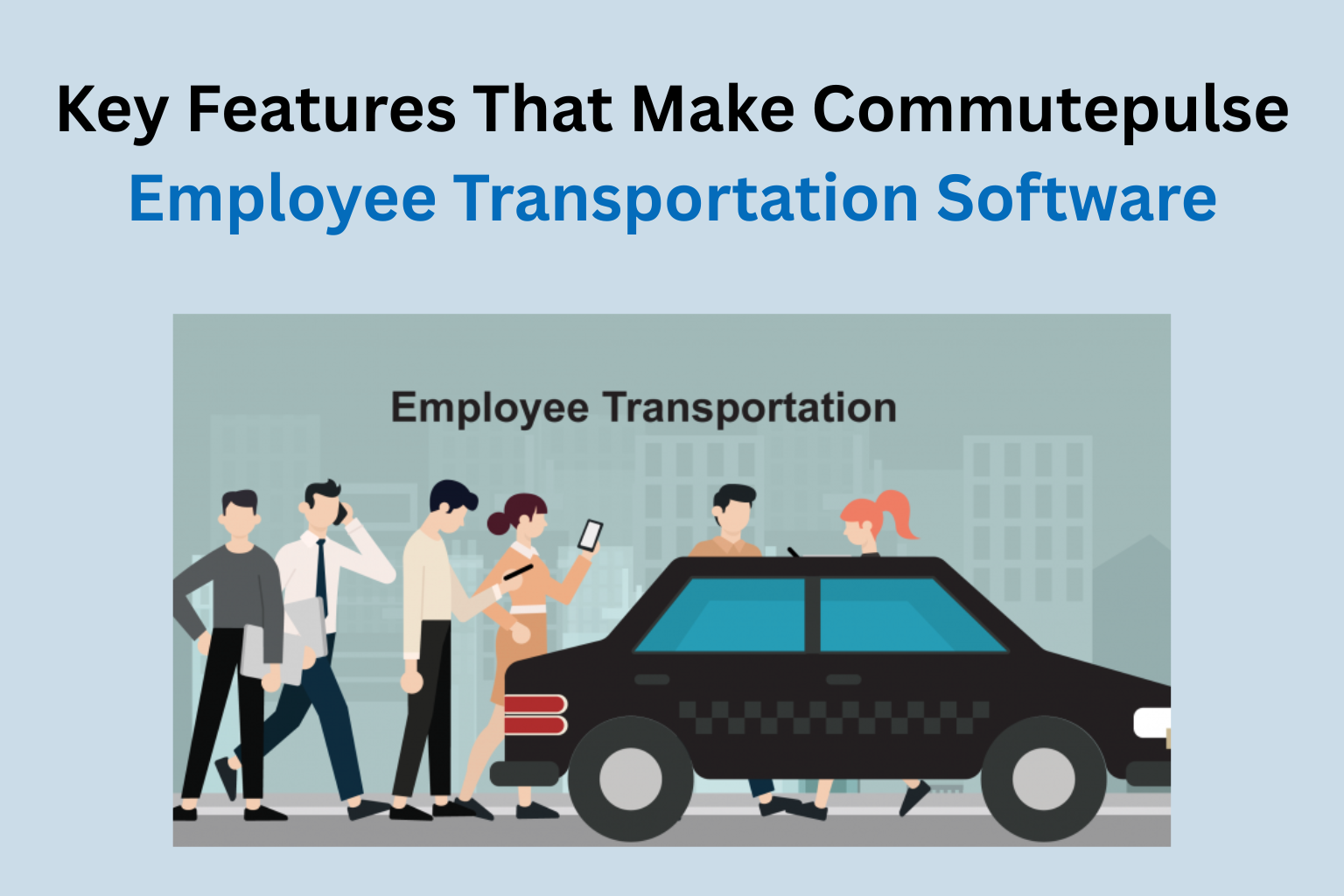
Ask any HR manager at a mid-sized Indian company what their most persistent operational headache is, and transport rarely makes the top three. It sits just below the line, present enough to be draining, not urgent enough to get budget.
That positioning is changing.
The combination of rising employee expectations, tightening safety compliance requirements, and the operational complexity of hybrid and shift-based work has pushed corporate commute management from a background function into a boardroom conversation.
Organisations that have been managing employee transport through vendor relationships and coordinator effort are discovering that the arrangement no longer scales, not reliably, not safely, and not cheaply.
Employee transportation software built for 2026 conditions is a meaningfully different product from what existed five years ago. The routing intelligence is better. The employee-facing experience is cleaner.
The compliance documentation is automated rather than reconstructed. And the operational visibility available to transport managers in real time has shifted from a premium feature to a baseline expectation.
CommutePulse by Aditi Tracking is built against that baseline. This is a direct account of what the platform does and why each feature matters in the operational context Indian organisations are actually working in.
Starting with the problem the market has not solved cleanly
Before the features, a brief diagnosis.
Most organisations that invest in employee transport management end up with a patchwork. A GPS vendor for the vehicles. A separate roster tool, often Excel. A WhatsApp group for driver communication. An HR system that handles payroll but has no connection to the transport operation. And a coordinator who ties the whole thing together, manually, every single day.
This patchwork produces a specific kind of operational drag. Nothing is catastrophically wrong. But nothing is connected. Data lives in four places and has to be manually reconciled. An employee’s schedule change has to be communicated to the coordinator, who tells the driver, who updates the manifest by hand. The lag between a change in the roster and its reflection in the actual transport operation is measured in hours, sometimes days.
CommutePulse was designed as a single connected system, not a feature added to an existing fleet tool. That design decision is what makes the individual features coherent rather than incidental.
The features that define the platform in 2026
Dynamic route and roster management
Static route planning breaks the moment shift patterns change, and in 2026, shift patterns change constantly. Hybrid work, rotating schedules, project-based attendance, new joiners, exits. Each change should reconfigure the transport plan automatically rather than requiring manual coordinator intervention.
CommutePulse connects roster data to route logic. When an employee’s schedule changes, their cab assignment updates. The driver receives an updated manifest. The employee receives updated pickup information. The coordinator sees the change reflected in the dashboard. Nothing requires a phone call to cascade.
This is not a convenience feature. For organisations with large headcounts and variable attendance, it is the difference between a transport operation that is continuously accurate and one that is continuously catching up to itself.
Live location tracking with deviation alerts
The live tracking component of CommutePulse operates continuously during active routes. Transport managers see every vehicle’s real-time position on a centralised dashboard, not a grid of check-in timestamps, but an actual map with moving vehicles.
What separates this from basic GPS is the deviation alert logic. Approved routes are configured in the system. When a vehicle leaves its assigned path, for any reason, an alert fires to the transport manager during the trip. Not in a post-trip report. Not in tomorrow’s exception log. During. The manager can respond while the situation is still in motion.
For organisations running night shifts, this is the feature that converts transport management from reactive to responsive.
Employee app with real-time ETA and boarding confirmation
The employee-facing experience in most corporate transport arrangements is poor. Employees call the coordinator to find out where their cab is. They wait at pickup points without accurate arrival information. They board cabs they cannot verify.
CommutePulse gives each employee a mobile app that shows their cab’s live location and an accurate, continuously updated ETA. When the cab is ten minutes away, they know. When it arrives, they receive a notification. When they board, the system logs the boarding and sends a confirmation to the employee and, where configured, to a designated contact.
The coordinator stops receiving “where is my cab” calls within the first week of deployment. That alone is a material improvement in how the transport function operates day to day.
Driver profile management and substitution handling
Driver substitutions at short notice are one of the most consistent sources of transport-related safety concerns in Indian corporate operations. An employee, particularly one travelling at night, boards a cab with an unfamiliar driver and has no mechanism to verify whether the substitution was authorised.
CommutePulse handles this through the platform rather than through informal communication. Every driver has a profile, name, vehicle assignment, verified contact details, trip history. When a substitution occurs, it is processed through the system. The affected employee receives a notification with the substitute driver’s details before the trip begins. The transport manager has a record of the change. The ad hoc WhatsApp message from an unknown number is replaced by a verified, documented transaction.
Automated trip records and billing reconciliation
At month-end, the billing conversation between an organisation and its transport vendor is either clean or contested. In most organisations it is contested, because the data needed to verify vendor claims, actual kilometres travelled, routes taken, trips completed, does not exist in a format that supports quick reconciliation.
CommutePulse generates this data automatically as a byproduct of normal operations. Every trip is logged: departure time, route taken, stops completed, boarding confirmations, arrival time, total distance. The transport manager can run a month-end reconciliation against vendor billing in an afternoon rather than across a week of back-and-forth.
The downstream effect on vendor accountability is significant. Vendors whose billing can be verified in detail tend to bill differently from vendors whose billing cannot.
Compliance documentation for safety audits
Here is where employee transportation software in 2026 carries obligations that software from five years ago was not designed to meet.
State-level guidelines for night shift transport, internal POSH compliance requirements, and the duty-of-care expectations that corporate legal teams are now formalising all require documentation. Specifically, they require that an organisation can demonstrate, with records, not recollection, that its employee transport operated within approved parameters.
CommutePulse produces this documentation as a continuous output of the system. Route adherence records. Boarding and alighting logs per employee per trip. Driver details for every journey. Deviation events and how they were resolved. This is the audit trail that compliance requires, generated automatically rather than reconstructed manually after something goes wrong.
What 2026 specifically demands that earlier versions did not
There are three shifts in the Indian corporate environment that make this the right year to evaluate employee transportation software seriously rather than deferring the decision.
Hybrid work has made attendance patterns genuinely variable
Fixed route planning based on consistent headcounts no longer reflects how most knowledge-work organisations operate. Dynamic rostering is a 2026 requirement, not a 2026 aspiration.
Employee expectations around commute experience have risen
The employee who joined in 2019 accepted transport uncertainty as normal. The employee joining now has reference points from consumer apps and expects real-time information as a baseline.
Safety compliance documentation is being audited more actively
The gap between what the policy says and what the organisation can demonstrate has narrowed in terms of tolerance. Organisations that cannot produce trip records and boarding logs in response to an audit query are finding that gap expensive.
CommutePulse is calibrated for all three of these conditions. The dynamic roster logic handles hybrid attendance. The employee app meets the experience expectation. The automated documentation covers the compliance requirement.
The operational picture after deployment
Organisations that deploy CommutePulse report a consistent pattern across the first quarter of use.
The coordinator’s day changes first. The volume of inbound queries from employees and drivers drops. The manual roster-to-driver communication loop is replaced by system-driven notifications. The coordinator moves from spending the majority of their time relaying information to spending it managing genuine exceptions, the situations that actually require human judgement.
The transport manager’s visibility changes next. Monthly review conversations shift from reconstructing what happened to discussing what the data shows and what to do about it. Vendor conversations become more direct because the data to support them exists.
The employee experience changes more gradually, but measurably. The uncertainty that characterises most corporate commutes, where is my cab, is it coming, did the route change, reduces. That reduction shows up not as a dramatic shift in engagement scores but as a quieter kind of confidence that the organisation’s operational infrastructure can be relied upon.
Why Aditi Tracking built CommutePulse for this specific market
Aditi Tracking has been building vehicle telematics for Indian organisations since 2011. That means fifteen years of understanding how Indian roads, Indian traffic conditions, Indian driver profiles, and Indian connectivity patterns interact with tracking technology in practice.
CommutePulse is not a Western employee transportation software product adapted for the Indian market. It was designed here, for the shift patterns, the vendor structures, the connectivity variability, and the compliance landscape that exist in Indian corporate transport operations specifically.
If your organisation is heading into the rest of 2026 with the same patchwork of GPS vendor, Excel roster, and WhatsApp coordination that it used in 2024, this is the year the gap becomes visible in a way it was not before.


 Smart Fleet
 Cool Bus
 Clicktask
 CommutePulse
 Wastetrail