
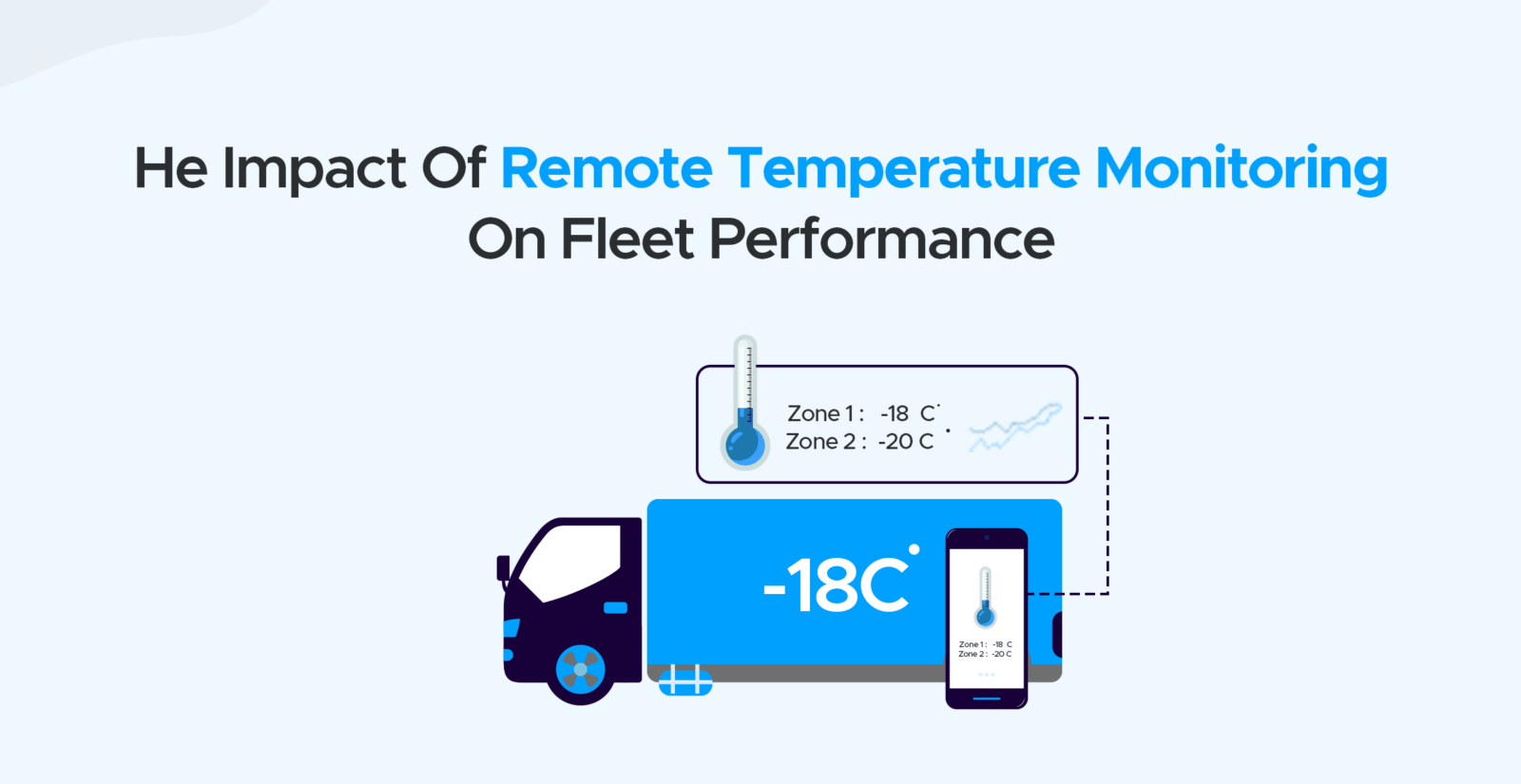
Remote temperature monitoring is crucial for fleets transporting temperature-sensitive goods such as pharmaceuticals, perishable foods, and chemicals. This technology ensures that goods remain within specified temperature ranges, thereby maintaining product integrity and compliance with regulations. This guide explores how remote temperature monitoring can significantly enhance fleet performance.
Understanding Remote Temperature Monitoring
Remote temperature monitoring involves the use of sensors to measure and transmit temperature data in real-time. This data is accessible through centralised monitoring platforms, allowing fleet managers to oversee and manage temperature conditions continuously.
Benefits of Remote Temperature Monitoring
- Quality Assurance: Ensures products are kept within the required temperature ranges, preserving quality and safety.
- Regulatory Compliance: Meets stringent regulatory requirements for transporting perishable and sensitive goods.
- Cost Savings: Reduces spoilage and waste, leading to lower operational costs and increased profitability.
- Real-Time Alerts: Immediate notifications of temperature deviations enable prompt corrective actions.
- Data Logging: Detailed records for auditing, reporting, and historical analysis.
Key Features of Remote Temperature Monitoring Systems
- Real-Time Monitoring: Continuous tracking with real-time data transmission.
- Alerts and Notifications: Customizable alerts for temperature deviations sent via SMS, email, or app notifications.
- Data Logging: Comprehensive recording of temperature data for compliance and analysis.
- Mobile Access: Remote access to data through mobile apps or web-based platforms.
- Integration Capabilities: Compatibility with existing fleet management systems for centralised monitoring.
Implementing Remote Temperature Monitoring
- Selecting the Right System
- Accuracy and Range: Choose sensors with high accuracy and suitable temperature ranges.
- Durability: Ensure devices are durable under various operating conditions.
- Ease of Integration: Opt for systems that integrate seamlessly with current fleet management software.
- Installation and Setup
- Sensor Placement: Strategically place sensors for comprehensive temperature coverage.
- Calibration: Regular calibration to maintain accuracy.
- Configuration: Set up thresholds, alert preferences, and logging intervals according to needs.
Want an estimate for your fleet? Try our Cost Calculator to see pricing based on your fleet size and vehicle count.
Enhancing Fleet Performance with Temperature Monitoring
- Improving Product Integrity
- Consistent Conditions: Maintain optimal temperature conditions to prevent spoilage and ensure product quality.
- Real-Time Interventions: Address temperature deviations promptly with real-time alerts.
- Optimising Route Planning
- Route Efficiency: Plan routes to minimise exposure to extreme temperatures and reduce transit times.
- Environmental Considerations: Factor in weather conditions and potential temperature fluctuations.
- Enhancing Operational Efficiency
- Preventive Maintenance: Monitor and maintain refrigeration units and temperature control equipment.
- Energy Efficiency: Optimise temperature control systems to reduce energy consumption and costs.
Leveraging Data for Performance Improvement
- Trend Analysis: Use historical data to identify patterns and improve processes.
- Compliance Reporting: Generate reports for regulatory authorities and customers.
- Continuous Improvement: Implement insights from data analysis to enhance fleet performance.
Overcoming Challenges
- Signal Interference: Remote areas or dense environments may cause signal issues.
- Solution: Use devices with multiple communication channels (e.g., cellular and satellite).
- Power Supply: Ensure reliable power for continuous monitoring.
- Solution: Use backup power options or battery-operated sensors.
Conclusion
Remote temperature monitoring significantly enhances fleet performance by ensuring product integrity, regulatory compliance, and cost savings. Implementing this technology leads to improved product quality, increased customer satisfaction, and greater operational efficiency. By leveraging real-time data and insights, fleet managers can make informed decisions that enhance overall performance and competitiveness.
FAQs
What is remote temperature monitoring in fleet management?
It’s the use of in-vehicle or in-container sensors to track temperature during transit and send that data to a monitoring platform in real time, so fleet managers get an alert the moment conditions move outside a safe range instead of finding out after delivery.
Is temperature monitoring mandatory for transporting pharmaceuticals in India?
Cold-chain compliance for pharmaceutical transport generally requires a documented, verifiable temperature record, not just a functioning cooling unit. The exact standard depends on the product category being transported, so it’s worth confirming the specific requirement that applies to your cargo.
How much does a temperature monitoring system cost?
Pricing depends on the sensor setup and how many vehicles need coverage. You can get an estimate for your fleet using our cost calculator, or speak to our team directly for a quote based on your specific routes and cargo.
What happens if the vehicle loses network signal mid-route?
Most systems continue logging data locally and sync it once connectivity returns, so the temperature record isn’t lost, you just get a gap in real-time alerting during the disconnect. Devices with a backup connectivity option run into this less often on remote routes.
Can temperature monitoring be added to a fleet that already has GPS tracking?
Yes, and it usually should be. Temperature sensors typically run on the same platform as your existing GPS system rather than requiring a completely separate one, so temperature alerts show up alongside location and route data instead of living in an isolated dashboard.
Related Reading
- Temperature Monitoring Solution — see the product this guide is based on
- Why Logistics Companies Are Investing More in Fuel Monitoring Than GPS — fuel and temperature issues often show up together in the same fleets
- How to Compare GPS Trackers in India — for pairing temperature monitoring with the right GPS setup
- GPS Tracking Device Installation Guide — installation principles that apply to sensors too
- Best Car Dashcam for Your Fleet — another layer of proof and monitoring for compliance-heavy fleets
If you’re moving temperature-sensitive cargo, see how Aditi Tracking’s temperature monitoring solution works with your existing fleet setup. Book a free demo or call us directly to talk through your specific routes and cargo.



 Smart Fleet
 Cool Bus
 Clicktask
 CommutePulse
 Wastetrail