
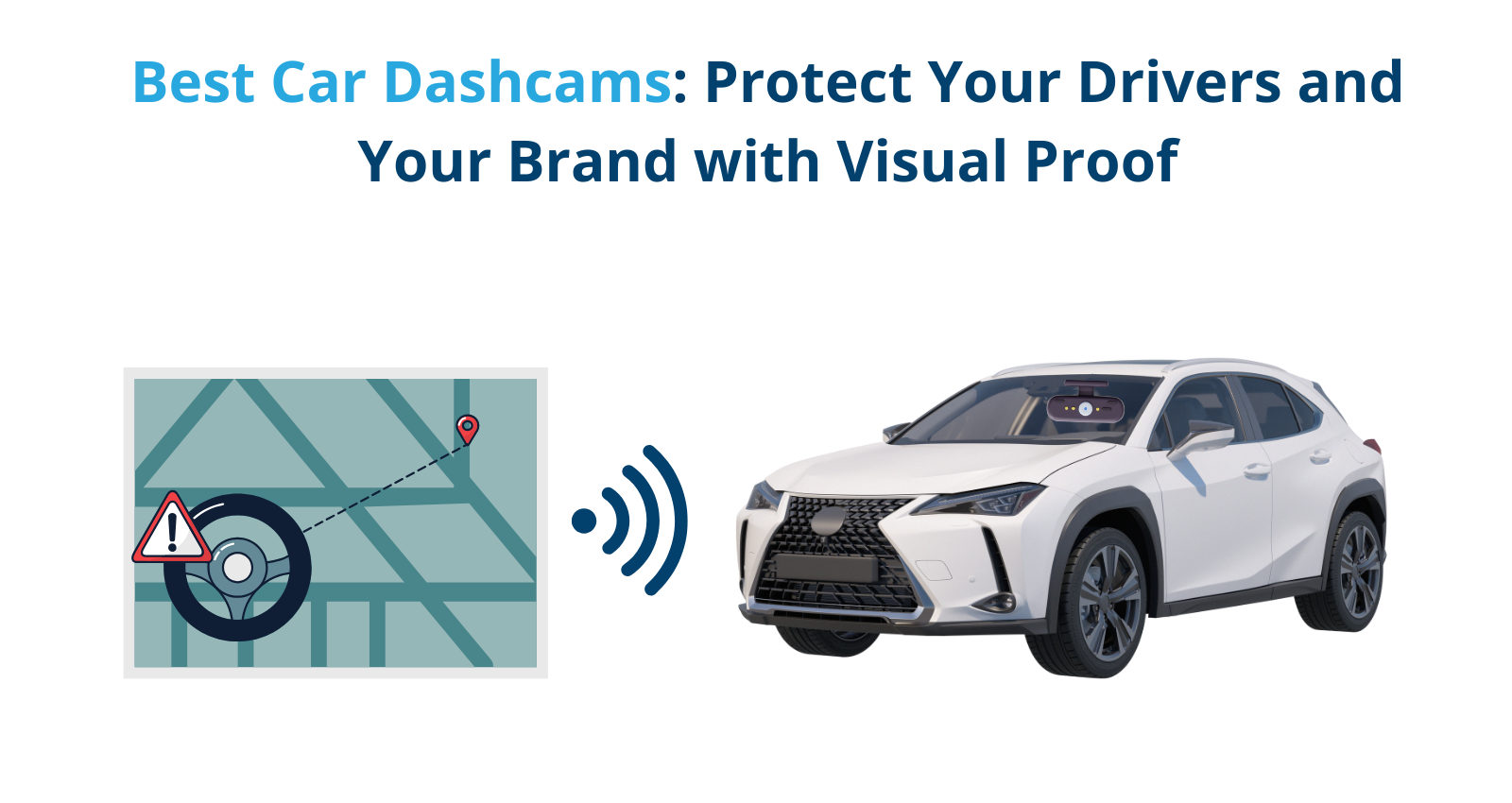
Why a Dashcam with GPS Tracker is No Longer Optional
In today’s high-risk driving environment, every fleet owner is one false claim or viral video away from financial and reputational damage. Whether you manage a logistics fleet, delivery team, or employee transport service, having a GPS dashcam for fleet vehicles is now essential, not a luxury.
A dashcam with a GPS tracker doesn’t just capture road footage; it builds your defence against disputes, enhances driver accountability, and adds a layer of operational transparency that clients and insurance companies love.
If you’re searching for the best car dash camera front and rear in India, Aditi Tracking’s GPS dashcam solution checks all the boxes, from real-time monitoring to high-resolution recording.
Why Your Fleet Can’t Ignore Dashcams Any Longer
- Fleets using video‑telematics report up to a 40 % drop in collision rates.
- Key camera providers cite 50–60 % lower claims costs after installation.
- The global dashcam market is growing at 11 % CAGR as insurers push for visual proof.
- Yet only 30 % of fleets have adopted in‑cab video, leaving plenty of room for competitive advantage.
Bottom line: fleets that add GPS‑linked video telematics save money and protect reputation, while late adopters pay the price.
How to Actually Choose a Fleet Dashcam
Most dashcam advice out there is written for someone buying one camera for one personal car. Fleets are a different problem, and a device that’s fine for a private car often doesn’t survive a 10-hour shift or a hundred stop-start deliveries in a day.
A few things actually matter here. Camera configuration comes first, a single road-facing lens is the bare minimum, but for fleets, especially anything involving passengers or deliveries, a dual-channel setup covering the road and the cabin is the real standard. It protects you from accident disputes and from “what actually happened inside the vehicle” disputes at the same time. Resolution matters too, mostly because a blurry number plate is useless as evidence, 1080p holds up much better than 720p once you’re relying on footage at night or in traffic.
The part that separates a camera from an actual fleet tool is GPS and G-sensor integration. Without it, you’re the one scrubbing through hours of footage trying to find the ten seconds that matter. With it, a hard brake or a sudden swerve auto-flags itself, tagged with location and speed, and you go straight to the moment. Storage matters in a quieter way, look for enough microSD capacity (128–256GB is typical) with loop recording, so the camera keeps working instead of stopping the day it fills up, and ideally cloud backup too, since a damaged or stolen SD card is footage you never had.
Two more things worth checking before you buy: how the unit is installed, and what it actually costs over time. A dashcam a driver can unplug in five seconds isn’t much of a safeguard, hardwired installs and tamper-resistant mounts matter more than they sound like they should. And the sticker price rarely tells the whole story. Factor in the SD card, any data plan for live streaming, installation, and support, because a cheaper unit that needs replacing in a year usually ends up costing more.
Comparing Dashcam Types
Not every fleet needs the same setup, and it helps to see the tiers side by side.
| Tier | Best For | Key Features | Limitations |
|---|---|---|---|
| Basic single-channel | Small fleets, tight budgets | Road-facing HD recording, loop recording, local SD storage | No cabin view, no GPS, and no remote review |
| Dual-channel with GPS | Most commercial fleets, delivery, and cabs | Road + cabin recording, GPS/G-sensor event tagging, tamper-resistant mounting | Still requires someone to manage SD cards unless paired with cloud backup |
| AI-enabled, cloud-connected | Large fleets, high-value cargo, and passenger transport | Live streaming, automatic event alerts, cloud storage, and driver-behaviour analytics | Higher upfront and subscription costs; requires decent connectivity |
Aditi’s GPS dashcam sits across the second and third tiers, twin front and cabin cameras, GPS and G-sensor tagging, and live maps running on the same platform as your existing GPS trackers, so you’re not stuck managing two separate systems for the same fleet.
Pain Points vs. Dashcam Superpowers
| Fleet Pain Point | How Aditi’s GPS Dashcam Fixes It |
|---|---|
| False accident claims & insurance disputes | Twin front + cabin cameras record 720p HD video with location, speed, and timestamp, providing evidence for accident and insurance disputes.Also Read: Dash Cams and Their Role in Reducing Insurance Expenses |
| Reckless or distracted driving goes unseen | Real-time remote monitoring with optional audio lets safety managers intervene before unsafe driving habits lead to serious incidents. |
| Missing context for harsh-event alerts | GPS and G-sensor flags for hard braking and sudden turns automatically bookmark footage, helping managers see exactly what happened. |
| Limited storage, lost footage | Up to 256 GB micro-SD support stores weeks of video, while loop recording helps prevent data gaps. |
| Drivers tamper with power cables | A seamless magnetic mount and optional internal battery help keep the dashcam recording even if the power connection is disconnected. |
| Need proof of service or delivery | Cloud video links can be shared with clients to verify arrival times and delivery activity, which is useful for high-value loads. |
| Fleet spread nationwide | The built-in GPS dashcam tracker feeds live vehicle locations into the Aditi platform, allowing vehicles and video footage to be managed from one screen. |
Still Confused? Read our guide on- How to Choose the Best Front and Rear Dash Camera for Your Car in India!
A Few Questions Fleet Owners Usually Ask
Is dashcam footage actually admissible as evidence in India?
Yes. The Bharatiya Sakshya Adhiniyam, 2023 treats timestamped, unaltered digital video the same way it treats physical documents. Most major insurers accept dashcam clips directly now, whether that’s to support a claim or push back on a fraudulent one.
Do I really need GPS, or is a regular dashcam enough?
A regular dashcam gives you footage. GPS gives you context, which vehicle, which route, what speed, what time, without you manually digging through hours of video to find it. For anything beyond one or two vehicles, that difference is the whole point.
How much storage does a fleet dashcam need?
128–256GB usually covers a full shift with loop recording. If you need footage for compliance or as proof of delivery for clients, don’t rely on the SD card alone, pair it with cloud backup.
Can a driver just disconnect it?
Not easily, if it’s installed properly. Hardwired setups and tamper-resistant mounts make it hard to remove on a whim, and higher-end units keep recording on an internal battery even if the power gets cut.
Won’t a cabin-facing camera make drivers uncomfortable?
It can, if you don’t explain it well. The framing that tends to work is that it protects the driver too, it backs up their version of events, not just yours. Being upfront about how the footage is used and how long it’s kept usually settles most of the concern.
Ready to Equip Your Fleet with the Best Car Dash Camera Front & Rear in India?
- Book a live demo—see real footage from on‑road vehicles.
- Pilot 5 units—validate ease of install and data quality.
- Roll out at scale—bundle dashcams with existing Aditi GPS hardware for volume pricing.
Contact us today or Book A Free Demo.
Protect your drivers. Defend your brand. Prove what really happened with Aditi’s GPS‑powered dashcam.
Sources
Geotab: “In the Driver’s Seat” Commercial Transportation Report
Valuates Reports: Car Dashcam Market Booms with 11.1% CAGR (via PR Newswire)


 Smart Fleet
 Cool Bus
 Clicktask
 CommutePulse
 Wastetrail