
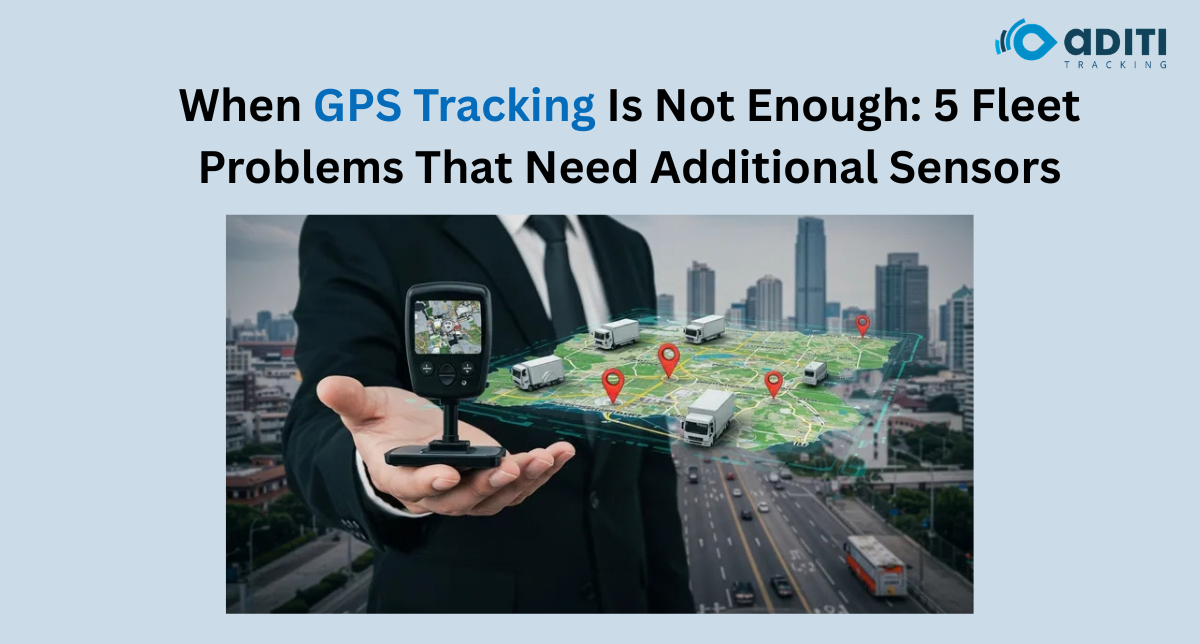
A vehicle can be exactly where the fleet manager expects it to be and still have an operational problem. Fuel may be dropping unexpectedly, temperature-sensitive goods may be exposed to unsuitable conditions, or cargo access may need closer control. GPS tracking solutions provide valuable location visibility, but some fleet problems require additional information from sensors and connected devices.
The key is knowing when location data has reached its limit.
GPS tracking shows where a vehicle is, but fuel use, cargo temperature, cargo access, driving behaviour and road events need additional sensors or connected devices to be visible. Start with the one question your fleet can’t answer today, then add technology to solve that gap.
Location Is Only One Part of the Journey
GPS is often the starting point for fleet visibility. It can help businesses monitor vehicle locations, routes, stoppages and movement.
But think about a refrigerated delivery truck travelling from one city to another. GPS can confirm that the truck followed the planned route and arrived on time. It cannot, by itself, explain whether the required temperature conditions were maintained throughout the journey.
That is a different operational question requiring a different type of data.
Here are five situations where fleets may need to look beyond standard vehicle tracking.
1. You Know the Route, But Not What Is Happening With Fuel
A truck completes its expected journey. There are no major route deviations and its delivery happens on schedule. Yet its fuel consumption appears unusually high.
Basic GPS information may not provide enough detail to understand the fuel-related issue.
Fuel monitoring systems can add another data layer by helping businesses observe fuel levels and usage alongside vehicle activity.
This can be useful when fleet managers are trying to investigate:
- Unexpected changes in fuel levels
- Unusual fuel consumption
- Differences in fuel usage between trips
- Possible fuel-related irregularities
Instead of reviewing vehicle movement and fuel separately, businesses can build a clearer operational picture.
2. Cold-Chain Cargo Needs More Than an Arrival Time
For ordinary cargo, reaching the destination safely and on time may be the main concern. Temperature-sensitive goods create another challenge.
Food, beverages and other temperature-sensitive products may need specific conditions during transportation. A truck reaching its destination does not automatically confirm that those conditions were maintained.
Temperature sensors help monitor this part of the journey.
This is where GPS tracking solutions can work alongside temperature monitoring. Fleet teams can understand not only where the vehicle travelled but also gain visibility into the conditions relevant to the cargo during transportation.
For cold-chain operations, that additional information can be far more useful than location alone.
3. Cargo Access Needs Tighter Control
Now consider a vehicle carrying valuable goods between a warehouse and multiple delivery points.
GPS can show whether the vehicle followed its route. It can show where it stopped. What it cannot do on its own is physically control access to the cargo compartment.
When cargo access is an important security concern, electronic locking solutions can provide an additional layer.
The distinction is simple:
- GPS monitors vehicle movement.
- Electronic locks help secure cargo access.
- Together, they address different parts of the security requirement.
Not every fleet needs this level of control. But for operations where unauthorised cargo access could create serious losses, vehicle location alone may not be enough.
4. The Vehicle Arrived, But How Was It Driven?
A delivery can arrive on time while the journey itself includes behaviour that the fleet manager would want to know about.
Speeding and harsh driving are examples.
GPS-based fleet systems and telematics can provide information about driving-related events, helping managers identify patterns across trips rather than relying only on arrival times.
Suppose one driver repeatedly records harsh driving events on the same route while others do not. That pattern gives the fleet manager something specific to investigate.
The value is not in generating endless alerts. It is in identifying behaviour that deserves attention.
5. You Need Visual Context, Not Just Data Points
Sometimes a location, timestamp or alert tells only half the story.
A vehicle may stop unexpectedly. A driving event may occur. The fleet manager can see the data but may still lack the visual context needed to understand what happened.
Dashcams can fill that gap by adding video-based journey visibility.
For fleets that require both location information and visual context, cameras can complement GPS tracking solutions rather than replace them.
This may be especially relevant for commercial transport, passenger fleets and businesses where understanding road events is an important part of fleet monitoring.
The Best Sensor Is the One That Solves a Real Problem
More sensors do not automatically create a better fleet.
Installing every available device can add unnecessary information if the business does not have a clear use for it. Fleet managers should first identify the question they cannot currently answer.
Is it about fuel? Cargo temperature? Access security? Driver behaviour? Visual evidence?
Once that gap is clear, the appropriate technology becomes easier to identify.
This approach also allows businesses to build their fleet monitoring setup gradually instead of trying to implement everything at once.
Build Visibility Around Your Actual Fleet Operations
Modern fleet management is moving beyond simply locating vehicles. The real objective is to understand the operational factors that matter during each journey. Combining GPS tracking solutions with the right monitoring technology can provide that deeper visibility where it is genuinely needed.
Aditi Tracking provides GPS vehicle tracking along with fuel monitoring, temperature monitoring, dashcams and electronic locking solutions. Businesses can explore the appropriate Aditi Tracking solution based on the specific visibility or security gaps within their fleet operations.
Which of these 5 gaps is your fleet missing?
Tell us what you need to see beyond location, and we’ll suggest the right fuel, temperature, lock or dashcam setup.
Contact Us About Your Fleet Gaps or Call Us
FAQs
1. Why is GPS tracking sometimes not enough for fleet management?
GPS primarily provides information about vehicle location and movement. Some operations also need visibility into factors such as fuel, temperature, cargo security or road events.
2. Can fuel sensors work with GPS tracking?
Fuel monitoring can complement GPS-based fleet monitoring by adding information about fuel levels and usage to vehicle activity data.
3. Why are temperature sensors important for some fleets?
Temperature monitoring is useful when businesses transport goods that need controlled temperature conditions during the journey.
4. Do all fleets need additional sensors?
No. Additional technology should address a specific operational requirement. A fleet that only needs basic vehicle visibility may not require the same setup as a cold-chain or high-value cargo operation.
5. Can additional sensors replace GPS?
Usually, they serve different purposes. GPS provides location and movement visibility, while sensors and connected devices add information about specific areas such as fuel, temperature, cargo access or journey conditions.


 Smart Fleet
 Cool Bus
 Clicktask
 CommutePulse
 Wastetrail