
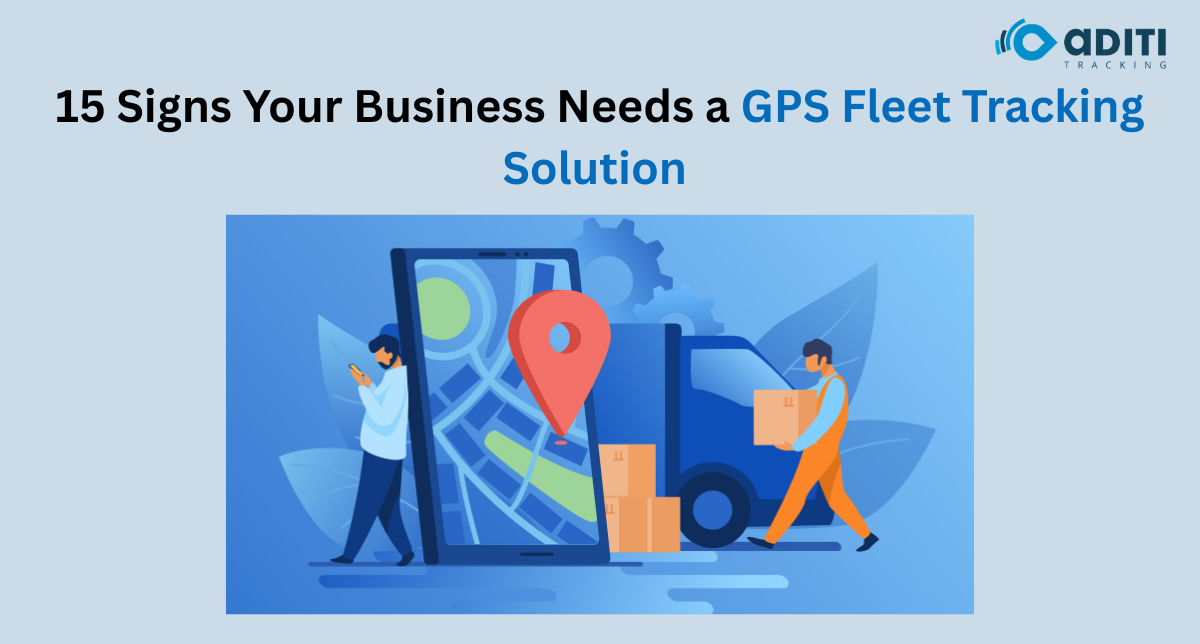
There is a version of this conversation that happens in every fleet-dependent business at some point. A fuel bill comes in higher than last month. A client calls asking where their delivery is. A driver claims the vehicle broke down but the timeline does not add up. And the operations manager has no data to work with, just accounts, assumptions, and a gut feeling that something is off.
GPS fleet tracking solutions exist precisely for this moment. Not as a technology upgrade, but as an answer to a very specific operational problem: you are running a fleet and you cannot see what it is actually doing.
Here are 15 signs that your business has reached that point.
Signs Related To Cost And Fuel
1. Your Fuel Bills Keep Climbing But Kilometres Driven Stay Flat
This is the most common trigger. When fuel consumption rises without a corresponding increase in trips or distance covered, something is being lost somewhere. Unauthorised personal use, engine idling, route deviation, or outright siphoning, the cause varies, but the symptom is consistent. A GPS fleet tracking solution cross-references fuel fill-ups against trip distance and flags the gap.
2. You Have No Way To Verify Fuel Receipts
Drivers submit fuel slips. You pay. Nobody checks whether the fill-up happened at the right location, during a scheduled trip, or at all. Without location data tied to timestamp, fuel reimbursements run largely on trust. That is a reasonable starting point. It is not a sustainable system once your fleet crosses 10 vehicles.
3. Maintenance Costs Are Unpredictable
A vehicle that runs with poor driving habits, hard braking, aggressive acceleration, prolonged idling, degrades faster. Tyres wear unevenly. Engine components fatigue earlier than they should. If your maintenance bills feel erratic and your workshop cannot give you a clear reason why, driver behaviour data is usually the missing piece.
Signs Related To Operations And Visibility
4. You Find Out About Delivery Delays After The Client Does
The client calls. Then you call the driver. The driver explains. You relay. This sequence is embarrassing, slow, and entirely avoidable. Real-time location visibility means your operations team knows about a delay before the client does and can proactively communicate.
5. You Cannot Answer “Where Is Vehicle X Right Now” Without Calling Someone
This sounds simple. But if answering this question requires a phone call, you have a visibility problem. Not a minor inconvenience, an actual operational gap. GPS fleet tracking solutions make this a five-second lookup, not a five-minute phone chain.
6. Route Planning Is Done By Experience, Not By Data
Drivers pick their own routes based on familiarity. Some routes are genuinely better. Others are longer, more congested, or simply preferred for reasons that have nothing to do with efficiency. Without route data, you cannot tell which is which, and you cannot optimise what you cannot see.
7. You Do Not Know How Long Vehicles Spend Idle Versus Moving
Idle time is wasted fuel. It is also a wear mechanism. A vehicle running at idle for two hours outside a warehouse is burning diesel and aging its engine for no productive output. If you do not have idle time data across your fleet, you are paying for something you have not measured.
8. Vehicles Are Being Used Outside Working Hours
Weekend movements. Late-night trips. A vehicle that covers 40 kilometres on a Sunday when your business is closed. This happens more often than fleet owners realise, and it only becomes visible when someone thinks to check the odometer carefully, or installs a tracking system.
Signs Related To Driver Behaviour And Safety
9. You Have Had Driver Incidents But No Data To Reconstruct What Happened
An accident happens. Or a near-miss. Or a complaint from another road user. Without trip data, speed records, and location timestamps, your investigation starts and ends with the driver’s account. That is not an investigation. That is a conversation.
10. Speeding Is A Persistent Problem Despite Repeated Reminders
Verbal warnings have a short half-life. Drivers slow down for a week and revert. Speed alerts tied to a GPS fleet tracking solution create accountability that a team briefing cannot. When drivers know their speed is logged and visible, behaviour shifts more durably than it does from any number of notices on the depot noticeboard.
11. You Have No Way To Monitor Harsh Braking Or Aggressive Driving
Harsh braking is not just a safety issue. It is a cost issue. Every hard stop transfers wear to brake pads, tyres, and suspension components. Over a year, across a 30-vehicle fleet, the accumulated cost is material. Driver behaviour scoring surfaces this before the workshop bill does.
12. You Cannot Verify Whether Drivers Are Taking Scheduled Rest Breaks
For long-haul transport, fatigue is a serious risk. The regulations exist for good reason. But compliance is impossible to verify without data. If a driver is logging rest stops that did not happen, you find out at the worst possible time, after an incident, not before.
Signs Related To Compliance And Accountability
13. Your Rto Or Client Audits Are Difficult To Prepare For
When someone asks for trip records, delivery timelines, or vehicle usage logs, how quickly can you produce them? If the answer involves spreadsheets, phone calls to drivers, and three days of manual reconciliation, your record-keeping is not fit for purpose. Fleet tracking creates an automatic, time-stamped audit trail.
14. You Are Scaling Your Fleet But Your Oversight Is Not Keeping Up
Ten vehicles, managed informally, can work. Twenty vehicles, managed the same way, start to develop blind spots. Thirty vehicles with no tracking system is a different business problem entirely, not just more of the same. Scale without visibility is not growth. It is exposure.
15. You Keep Losing Time To Problems That Tracking Would Have Caught Early
A vehicle that should have been in for service three weeks ago. A driver whose fuel consumption has been climbing for two months. A route that adds 40 minutes to every delivery because nobody mapped it properly. These are not individual incidents. They are signals. A fleet that generates data can catch them early. One that does not, catches them late, after the cost is already incurred.
What Is This List Really Telling You?
None of these 15 signs are catastrophic on their own. Most fleet businesses operate with several of them simultaneously and consider it normal. The question is not whether these problems exist, they almost certainly do. The question is how much they are costing you in fuel, maintenance, delays, and management time every month.
That is the number that makes the case for GPS fleet tracking solutions clearer than any feature brochure can.
Turn Fleet Blind Spots Into Better Business Decisions
The warning signs above rarely disappear on their own. As a fleet grows, rising fuel use, route delays, unauthorised trips, unsafe driving, and incomplete records usually become harder and more expensive to manage.
Aditi Tracking helps businesses replace assumptions with reliable fleet data. Since 2011, we have supported commercial fleets across India with GPS fleet tracking solutions designed to improve vehicle visibility, monitor driver behaviour, strengthen accountability, and give operations teams greater control over everyday fleet activity.
Whether you manage a small group of vehicles or an expanding multi-location fleet, we can help you identify the tracking features that matter most to your operations without adding unnecessary complexity.
Speak with the Aditi Tracking team to assess your current fleet challenges and build a GPS tracking setup that helps reduce avoidable losses, improve response times, and keep every vehicle more accountable.
FAQs
1. What is a GPS fleet tracking solution, and how does it work?
A GPS fleet tracking solution uses GPS technology and mobile connectivity to monitor the real-time location, movement, and performance of fleet vehicles. It helps businesses track trips, improve route planning, monitor driver behaviour, and access valuable operational data from a central dashboard.
2. How do I know if my business needs a GPS fleet tracking solution?
If you frequently face issues such as rising fuel costs, delivery delays, poor fleet visibility, unauthorised vehicle usage, or difficulty monitoring driver performance, it may be time to invest in a GPS fleet tracking solution to improve operational control and efficiency.
3. Can GPS fleet tracking solutions help reduce operating costs?
Yes. GPS fleet tracking solutions can help reduce fuel consumption, minimise unnecessary idling, optimise routes, improve vehicle utilisation, and encourage safer driving habits. Over time, these improvements can contribute to lower operating and maintenance expenses.
4. Are GPS fleet tracking solutions suitable for small fleets?
Absolutely. Businesses with even a small number of vehicles can benefit from improved visibility, better scheduling, and simplified fleet management. As the fleet grows, a GPS fleet tracking solution also makes it easier to scale operations without losing oversight.
5. What features should I look for in a GPS fleet tracking solution?
Look for features such as real-time vehicle tracking, route history, geofencing, driver behaviour monitoring, idle time reports, maintenance reminders, alerts, and detailed reporting. The right combination of features should align with your fleet’s daily operational needs.

 Smart Fleet
 Cool Bus
 Clicktask
 CommutePulse
 Wastetrail