
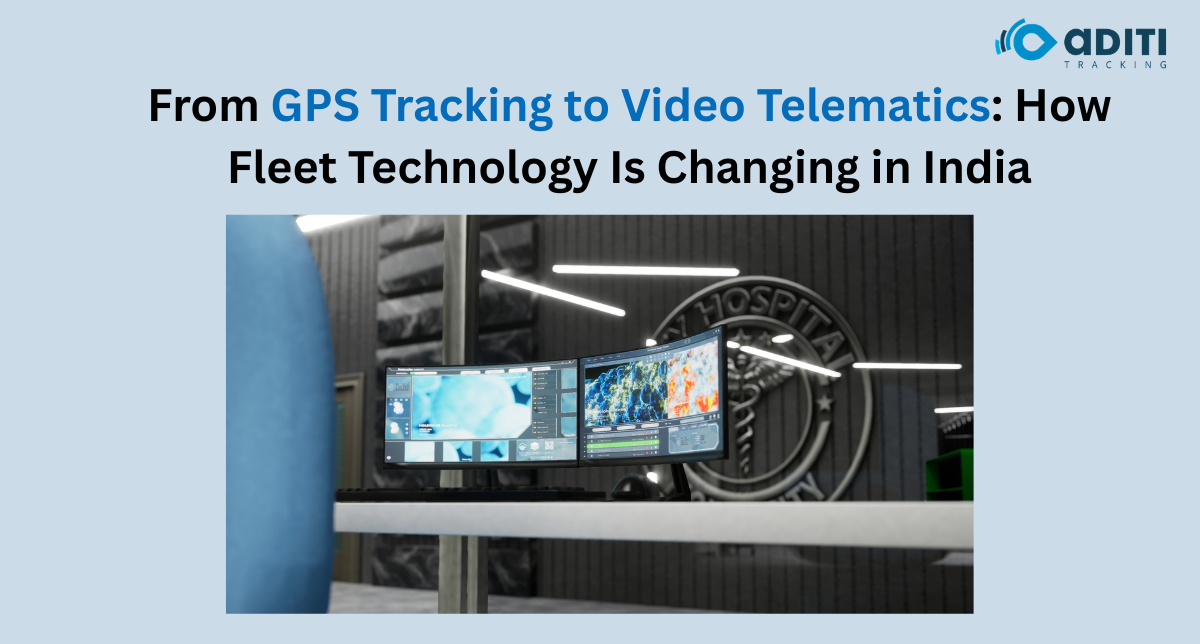
For years, fleet technology was mainly about answering one question: where is the vehicle? That is still important, but Indian fleet operators now need more context around every journey. A video telematics system adds visual information to location and driving data, helping businesses understand not just where an event happened, but what was happening around it.
This shift is changing how transport and logistics teams think about fleet monitoring.
GPS Created Visibility. Fleets Now Want Context.
GPS tracking solved a major operational problem by allowing businesses to monitor vehicle locations, routes, stoppages and movement.
That was a big improvement over relying on calls, manual updates or driver estimates.
But location data has limits.
Suppose a truck stops suddenly on a highway for 20 minutes. GPS can show the exact location and duration of the stop. What it cannot explain is why the vehicle stopped.
Was there traffic ahead? Did the driver face a road obstruction? Was there an incident?
That missing context is where video-based fleet technology starts becoming useful.
Video Changes the Type of Questions Fleet Managers Can Ask
Traditional tracking focuses heavily on vehicle movement. Video telematics adds a visual layer to that information.
Instead of only seeing a location point or driving event, fleet teams can gain additional context around what happened during the journey.
This can be useful when businesses are trying to understand situations such as:
- Sudden braking
- Unexpected stops
- Road incidents
- Driver behaviour
- Unusual journey events
- Disputes about what happened on the road
A video telematics system can make these situations easier to review because managers are not working only with timestamps and map data.
The goal is not to watch drivers continuously. The real value is having better information when something needs to be understood.
Why GPS Alone Can Leave Questions Unanswered
Imagine two vehicles travelling on the same route.
Both record a harsh braking event at almost the same location.
Looking only at the data, a fleet manager might assume both drivers behaved badly. But video could reveal that road conditions, sudden traffic movement or another vehicle caused the event.
That difference matters.
Without visual context, fleet managers may sometimes make decisions based on incomplete information.
Video telematics can help connect three pieces of the journey:
- Where the vehicle was
- What driving event occurred
- What was happening around the vehicle
This combination can make fleet review more practical.
Indian Fleet Operations Are Becoming More Data-Driven
Transport businesses today are managing more than vehicle locations.
They may also be looking at fuel usage, driver behaviour, route adherence, vehicle utilisation and operational delays.
As fleets grow, manual monitoring becomes difficult. Managers cannot realistically call every driver or investigate every event separately.
This is why fleet technology is gradually moving towards systems that bring more operational information together.
A video telematics system fits into this shift because it helps convert selected road events into something managers can actually review rather than simply receiving another alert.
That can make fleet monitoring more useful, especially for businesses operating multiple vehicles across long or busy routes.
Dashcams and Video Telematics Are Not Exactly the Same Thing
A standard dashcam mainly records video.
Video telematics goes a step further by connecting video with fleet-related information such as vehicle location and driving events.
That difference is important.
A recorded video file may be useful after an incident, but connected video can provide more context around when and where the event occurred.
This makes the technology more relevant for commercial fleet management rather than simple road recording.
For businesses, the question is therefore not only, “Do we need cameras?”
A better question is:
“Do we need video connected with our fleet monitoring process?”
Which Fleets May Benefit Most?
Video telematics may be particularly relevant where road visibility and driver-related information are operational priorities.
Examples can include:
- Logistics and transport fleets
- Delivery vehicles
- Commercial trucks
- Passenger transport operations
- Fleets covering long-distance routes
- Businesses that regularly review driving events
However, this does not mean every fleet should immediately move to video monitoring.
A smaller operation that only needs basic vehicle location may still be well served by GPS tracking. Technology should match the actual problem rather than being adopted simply because it is newer.
The Technology Stack Is Becoming More Connected
Fleet management is gradually moving from individual devices towards connected systems.
GPS may provide location. Fuel monitoring adds another layer. Driver-related data can highlight behaviour. Dashcams provide visual context.
When these elements work together, fleet managers can build a more complete understanding of how vehicles are operating.
This is where a video telematics system represents an important step forward. It does not replace GPS. It builds on it by adding visual context to journey data.
Moving From “Where Is the Vehicle?” to “What Happened?”
That is ultimately the biggest change in fleet technology.
Earlier systems helped businesses locate vehicles. Newer fleet tools are helping managers understand the events happening around those vehicles.
For Indian fleet operators, this can mean better visibility into journeys, road events and driver-related activity without relying entirely on manual follow-up.
Aditi Tracking provides GPS tracking and dashcam solutions for fleet monitoring requirements. Businesses looking to strengthen both vehicle visibility and journey context can explore Aditi Tracking’s available solutions based on their operational needs.
Your GPS shows the stop. Can you see the reason?
Tell us about your fleet and routes, and we’ll suggest the right GPS and dashcam setup for your operation.
Contact Us About Fleet Dashcams or Call Us
FAQs
1. What is a video telematics system?
A video telematics system combines video-based monitoring with fleet information such as vehicle location and driving-related events.
2. How is video telematics different from GPS tracking?
GPS mainly shows where the vehicle is and how it moves. Video telematics adds visual context that can help explain what happened during certain journey events.
3. Is video telematics the same as using a normal dashcam?
Not exactly. A normal dashcam records video, while video telematics connects video with fleet and journey-related information.
4. Do all fleets need video telematics?
No. The requirement depends on the fleet’s size, operating conditions and monitoring needs. Some businesses may only need GPS tracking.
5. Can video telematics replace GPS?
No. Video telematics generally builds on GPS-based visibility rather than replacing it. GPS remains important for location and route monitoring.

 Smart Fleet
 Cool Bus
 Clicktask
 CommutePulse
 Wastetrail