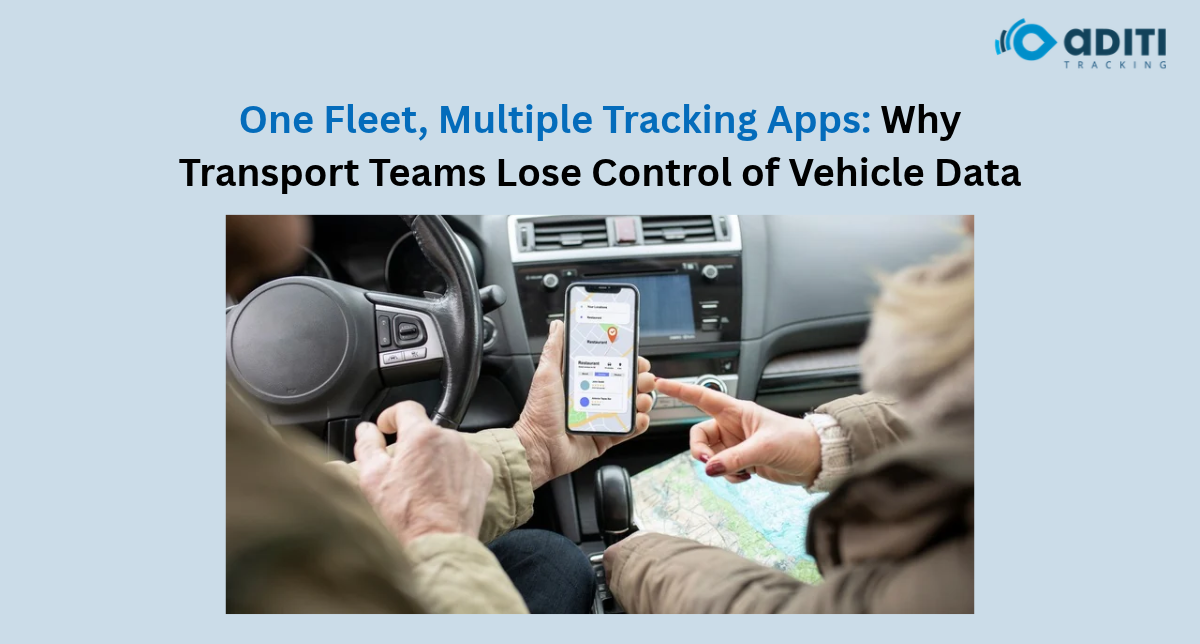
Imagine you are a transport manager with a fleet of 80 vehicles. You have 30 of those vehicles on one gps application. You have another 25 vehicles on another app and the rest are being tracked by a third provider.
Your customer wants to know why their cargo is taking longer to arrive. You will need to open 3 different apps to locate the vehicle your customer is looking for.
This scenario happens more often than you think when your company grows and you add more vehicles to your fleet.
Having multiple gps fleet tracking solutions isn’t bad in itself. The problem is when your vehicles are all over different tracking systems. It becomes hard to monitor your vehicles day-to-day and produce reports.
Why do transport companies end up with multiple tracking systems?
Usually they don’t set out to track their fleet on different applications.
You buy your first 10 vehicles with a gps unit from a provider. Then you buy another batch of vehicles and another provider sells you their units. Maybe your hired vehicles come with a gps unit fitted.
All of a sudden you could have your team logging into multiple applications to keep track of your fleet.
There are many other reasons too.
- You may have used different gps providers for your different types of vehicles.
- Your hiring company may have provided tracking systems for their vehicles.
- You may have separate applications for fuel and vehicle tracking.
- You may have some older units that you can’t integrate into newer tracking software.
- Or maybe you have different requirements at each business location.
Each application might do what it’s meant to do but it can be frustrating as a transport manager to not have an overview of your entire fleet.
How does this affect your business?
Losing time trying to find information on your vehicles.
Your Dispatch Team Will Have Less Time to Allocate Vehicles
If a customer asks for an urgent pickup. Your dispatch team needs to work out which vehicle is closest.
But they don’t know because their vehicles are on different tracking applications. They will have to go through multiple apps to find the information they need.
Which can cause delays in allocating vehicles to jobs. Especially if it’s peak time.
Difficulty Producing Reports
Different tracking systems will give you reports in different ways.
One application may show you idle time. Another application will show you a day report. Some may have different information about your stops.
Trying to put this information together can be time consuming.
Missing Important Information
You could be receiving alerts on different tracking systems.
If your team has to remember which vehicle is on which application. They may not act as quick on certain events. Like if a driver strays from a set route.
Why you should have one view of your fleet
As a transport manager you need to know where your vehicles are. At any given time.
You want to be able to look at previous movements and troubleshoot any issues that may be occurring.
By finding the right gps fleet tracking solutions you can allow your business to benefit from a organised way of tracking your vehicles.
Of course having one application to monitor your fleet doesn’t fix everything.
You will want to ensure you have good reporting and tracking systems as well as the ability to connect to your devices.
Will my gps units work on the same platform?
Some can. There are fleet management systems that allow you to connect multiple types of gps units. Through various forms of communication.
However this is not always possible.
You will want to find out if your current gps units are compatible with the new software. Does your gps provider allow this? What information can be pulled from your units?
Will you still have the ability to track fuel and other devices? Can you pull past tracking history?
These are all questions you should ask before implementing a new system. You may have to change some of your gps units if they aren’t compatible.
What can you do to help your fleet?
You can take steps to start improving your tracking setup.
You don’t have to change all of your tracking units overnight. Here are some tips to get you started.
First you will want to map out all of your current tracking systems. Write down what applications you have and how many vehicles you have on each system.
Next you should find out what type of reporting you currently do. Ask your team what type of information they are struggling to get. Or if there are too many steps involved in doing something.
After that find out if there is any way you can integrate your current systems. If not, how much would it cost you to change them? Versus keeping them separated.
Try out your new setup on a smaller scale. See if your new system meets your expectations for your tracking. You can then expand it to your whole fleet.
Lastly, make sure you are getting your reports from each application in the same way. So your team knows what to expect.
Things to consider when choosing a fleet tracking provider
There is more to choosing a fleet tracking provider than the price of their units.
You want to know if they can provide you with reliable tracking and reporting. As well as support when you have questions about your system.
And what will happen when you add more vehicles to your fleet.
Find a GPS fleet tracking solution that will help your business run smoother.
Bring More Clarity to Fleet Operations
Managing several tracking applications can make everyday fleet supervision harder than necessary.
Aditi Tracking provides GPS vehicle tracking and fleet management solutions for commercial operations. Businesses exploring gps fleet tracking solutions can contact Aditi Tracking to discuss their existing devices, reporting needs and available management options.
Frequently Asked Questions
1. Why do fleet operators use multiple GPS tracking apps?
This often happens when vehicles are purchased from different suppliers or tracking devices are installed at different times.
2. Can all GPS devices connect to one dashboard?
Not always. Compatibility depends on the device model, communication protocol, provider permissions and software integration support.
3. Does using multiple tracking apps affect GPS accuracy?
Not directly. However, differences in reporting intervals and data presentation can make fleet information harder to compare.
4. Is replacing every GPS tracker necessary?
No. Some existing devices may work with compatible software. Technical checks are needed before deciding.
5. How can centralised fleet reporting help transport companies?
It can reduce manual reporting work, improve vehicle visibility and help managers review operational information more efficiently.

 Smart Fleet
 Cool Bus
 Clicktask
 CommutePulse
 Wastetrail