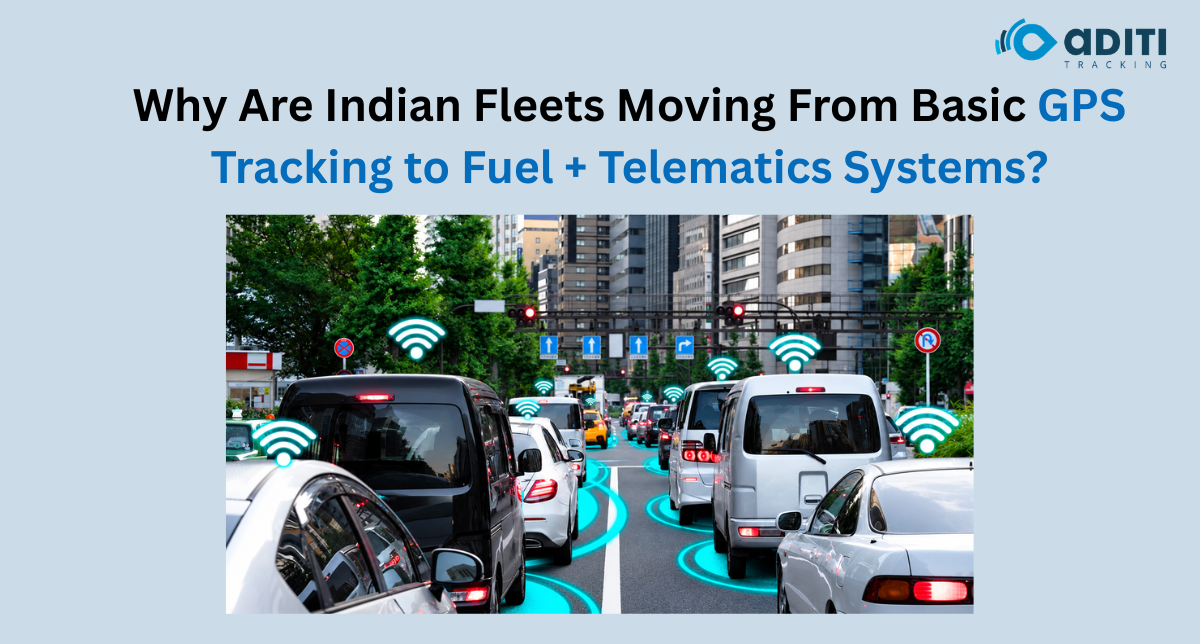
Knowing where a vehicle is can solve one problem, but fleet operators today need answers to much bigger questions. How efficiently is the vehicle being used? Where is fuel going? Is the driver following the planned route? This is why many businesses are looking beyond basic GPS and moving towards telematics vehicle tracking for deeper operational visibility.
For Indian fleets working across busy cities, highways and long-distance routes, vehicle location is only one part of the daily picture. Better fleet management depends on understanding what is happening around that location.
Basic GPS Answers “Where?” But Fleets Need More
Traditional GPS tracking became useful because it gave fleet managers a simple way to see vehicle locations and movement.
That remains important. However, consider what happens when a vehicle is exactly where it should be, yet the trip is still costing more than expected.
Location data alone may not explain:
- Why fuel consumption has increased
- Why a vehicle spent too long idling
- Whether an unusual route was taken
- Whether speeding or harsh driving occurred
- Why one vehicle is performing differently from another
- Whether the vehicle entered or left a defined area
For a small fleet, managers may be able to investigate these issues manually. Once the number of vehicles increases, that becomes much harder.
This is where telematics starts becoming more relevant.
Fuel Has Become a Fleet Management Issue, Not Just an Expense
Fuel is one of the areas where limited visibility can create operational problems.
A fleet manager may know how much fuel was purchased, but that figure does not always explain how efficiently it was used. Unexpected consumption can come from several factors, including excessive idling, inefficient driving patterns, route changes or other operational issues.
Fuel monitoring gives fleet operators another layer of information to examine alongside vehicle movement.
Instead of only asking, “Where is the truck?”, the team can start asking:
“Why did this trip consume more fuel than expected?”
That is a much more useful operational question.
When fuel information and telematics vehicle tracking work together, managers get more context rather than looking at separate pieces of information.
Telematics Turns Vehicle Movement Into Operational Data
The shift towards telematics is largely about getting more meaning from fleet activity.
A vehicle travelling from Delhi to Jaipur, for example, is not simply a moving dot on a screen. During that journey, several events can affect cost, safety and delivery performance.
Fleet managers may want visibility into:
- Route movement and trip history
- Vehicle stoppages
- Geofence entry and exit
- Speeding events
- Harsh driving behaviour
- Fuel-related information
- Vehicle usage patterns
Each piece of information becomes more valuable when viewed as part of the same journey.
This is one reason telematics vehicle tracking is becoming relevant to businesses that want to manage fleet performance rather than simply monitor vehicle positions.
Growing Fleets Make Manual Monitoring Difficult
A five-vehicle operation and a 100-vehicle operation cannot be managed in exactly the same way.
As a business grows, fleet managers have more drivers, routes, deliveries and vehicle activity to monitor. Calling drivers repeatedly or checking individual trips manually can consume time without giving management a complete view.
Telematics systems help organise fleet information so teams can identify events that need attention.
The goal is not necessarily to watch every vehicle every minute. It is to make important fleet activity easier to notice.
For example, managers can focus on exceptions such as unusual stops, route deviations or speeding instead of manually reviewing every normal journey.
Better Data Can Support Better Fleet Decisions
Adding more technology does not automatically make a fleet efficient. The real value comes from how businesses use the information.
Useful fleet data can help managers compare journeys, identify repeated problems and understand whether an issue is isolated or becoming a pattern.
Over time, these insights can support decisions around:
- Route planning
- Driver management
- Fuel usage
- Vehicle utilisation
- Operational control
- Fleet safety practices
This represents a clear change from basic tracking. GPS tells a business what happened geographically. Telematics can provide additional context around how the fleet operated.
Is Basic GPS Tracking Still Useful?
Yes. Not every business needs the same level of fleet monitoring.
For companies that mainly need vehicle location and basic movement visibility, GPS tracking may still meet their requirements.
But businesses managing frequent trips, multiple drivers, fuel usage and larger fleets may eventually need more information. That is when telematics vehicle tracking and connected monitoring systems become more useful.
The right approach depends on what the fleet actually needs to measure and manage.
Moving From Tracking Vehicles to Understanding Operations
Indian fleet operators are not abandoning GPS. They are building on it. The shift towards fuel monitoring and telematics reflects a wider need to understand what happens during every journey, not simply where the vehicle travels.
Aditi Tracking provides GPS tracking, fleet management, fuel monitoring and telematics solutions designed to give businesses greater visibility into fleet activity. Companies looking to move beyond basic location tracking can explore Aditi Tracking’s solutions based on their operational requirements.
Vehicle on schedule, trip still cost more than expected?
Tell us about your fleet, and we’ll show you how fuel monitoring and telematics can explain where the extra cost came from.
Contact Us About Fleet Telematics or Call Us
FAQs
1. What is telematics in fleet management?
Telematics combines vehicle-related data with communication technology to help businesses monitor and understand fleet activity, including location, routes and driving-related events.
2. How is telematics different from basic GPS tracking?
GPS primarily provides vehicle location and movement information. Telematics can add further operational data, helping fleet managers understand what is happening during a journey.
3. Why is fuel monitoring useful for fleets?
Fuel monitoring can give businesses better visibility into fuel usage and help them investigate unexpected consumption or operational patterns.
4. Do small fleets need telematics?
Not necessarily. The right system depends on the number of vehicles, daily operations and the information a business needs to manage its fleet effectively.
5. Can telematics replace GPS tracking?
Telematics generally builds on GPS-based location information rather than making it unnecessary. It adds additional operational context that can support broader fleet management.


 Smart Fleet
 Cool Bus
 Clicktask
 CommutePulse
 Wastetrail