
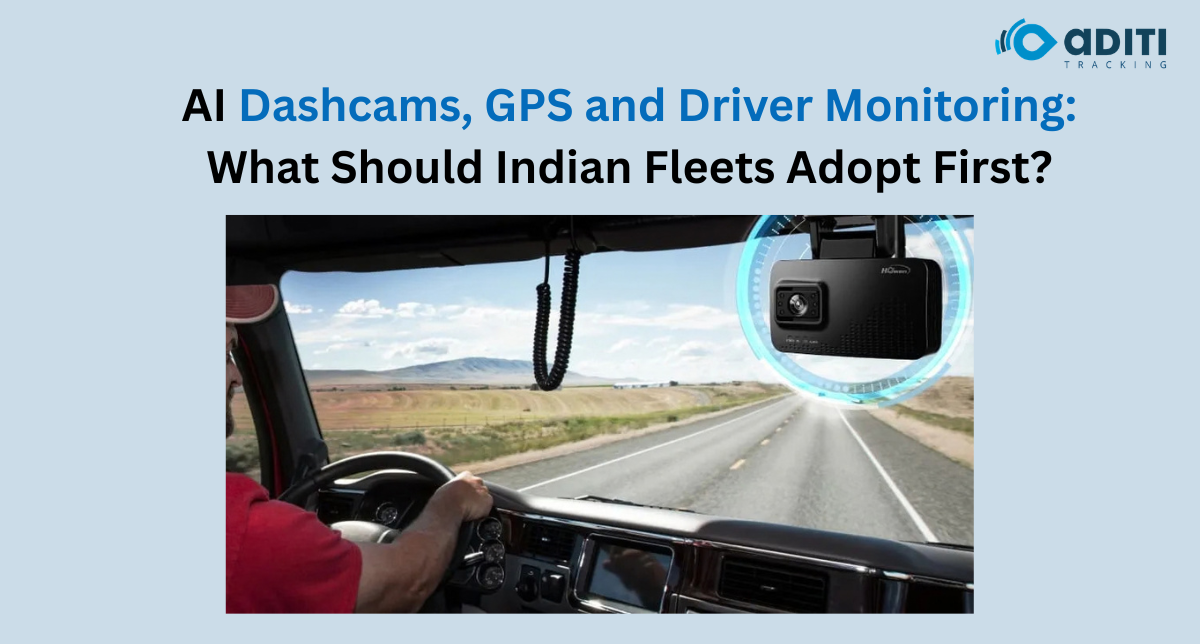
A fleet does not become smarter simply by installing more technology. GPS, AI dashcams and driver monitoring solve different operational problems, so the right starting point depends on what a fleet needs to control first. For many businesses, a dashcam with a GPS tracker becomes relevant when location data alone no longer provides enough context about what happens on the road.
The practical question, therefore, is not which technology sounds more advanced. It is which problem should be solved first.
Start With the Problem, Not the Device
Start with GPS tracking if you lack basic vehicle visibility, add a dashcam with GPS tracker when you need video context of journeys, and bring in driver monitoring or AI-enabled features as safety needs and fleet complexity grow. The right order depends on which operational gap your fleet needs to close first.
Imagine three transport businesses.
The first struggles to know where its vehicles are during the day. The second already tracks vehicles but regularly receives complaints about unsafe driving. The third wants better information when something unusual happens during a trip.
Buying the same system for all three would make little sense.
Before investing, a fleet manager should identify the biggest operational gap:
- Poor visibility of vehicle location
- Frequent route deviations
- Speeding or harsh driving concerns
- Limited information about road incidents
- Difficulty understanding driver behaviour
- Need for visual context during journeys
Once the problem is clear, choosing the technology becomes easier.
If Vehicle Visibility Is Missing, GPS Comes First
For fleets with little or no digital monitoring, GPS tracking is usually the foundation.
It answers some of the most basic operational questions: Where is the vehicle? Which route did it take? Where did it stop? Did it enter or leave a defined area?
This information can help fleet teams monitor movement without repeatedly calling drivers for updates.
GPS also creates a useful base for other technologies. There is limited value in adding advanced monitoring if a business still lacks basic visibility into how its vehicles move throughout the day.
But GPS has a natural limitation. It can show where something happened without necessarily showing what happened.
That is where cameras become useful.
When Does a Dashcam Become the Next Logical Step?
Suppose GPS data shows that a truck stopped unexpectedly for several minutes. Location information identifies the stop, but it cannot provide visual context about the road situation.
A dashcam can add that missing perspective.
This makes a dashcam with a GPS tracker useful for fleets that want location information supported by video evidence. Rather than treating tracking and video as completely separate sources, fleet teams can gain a clearer understanding of journeys and road events.
Dashcams may be particularly relevant for:
- Commercial trucks covering long distances
- Passenger transport fleets
- Delivery vehicles operating throughout the day
- Fleets concerned about road incidents
- Businesses that need stronger journey visibility
The purpose is not to collect video simply because the technology is available. It should solve a defined fleet-management need.
Driver Monitoring Addresses a Different Question
Driver monitoring moves the focus from the vehicle to driving behaviour.
For example, a fleet may already have reliable location tracking but continue to see repeated speeding, harsh braking or other risky driving patterns. In this situation, adding another basic GPS device will not address the actual issue.
Driver-related monitoring can help fleet managers identify patterns that deserve attention.
That information can then support practical conversations with drivers. If the same behaviour appears repeatedly, managers have something more useful to work with than assumptions or occasional complaints.
Technology works best here as a management tool. It should help businesses identify patterns and improve fleet practices, rather than simply produce more alerts.
Where Do AI Dashcams Fit?
AI-enabled dashcams take video-based monitoring further by using intelligent detection capabilities to identify specific road or driving-related events.
This can be valuable, but it does not automatically mean every fleet should start there.
A smaller fleet that primarily wants location visibility may get more immediate value from GPS tracking. A business that already has GPS but needs visual context may have a stronger case for a dashcam with GPS tracker. A mature fleet with defined safety concerns may then consider more advanced driver and video monitoring.
The sequence should follow the operational requirement.
A Simple Way to Decide What Comes First
Instead of asking which fleet technology is best, ask what information is currently missing.
Choose GPS first when: basic vehicle location, routes and movement are difficult to monitor.
Add dashcams when: visual information about journeys and road events would improve understanding.
Consider driver monitoring when: driving behaviour has become an important operational or safety concern.
Explore AI-enabled monitoring when: the fleet has enough vehicles and operational complexity to benefit from more intelligent event detection.
In some cases, these requirements overlap. That is where an integrated dashcam with GPS tracker can become useful rather than managing location and video visibility independently.
Build the Fleet Technology Stack in the Right Order
Indian fleets vary enormously in size, routes, vehicle types and daily challenges. There is no reason every operator should adopt GPS, AI dashcams and driver monitoring at the same time.
Start with the biggest visibility gap. Once that problem is under control, add technology that answers the next important operational question.
Whether you need basic vehicle visibility or want to add video context to every journey, Aditi Tracking offers GPS trackers and a dashcam built for Indian fleet operations. Tell us your biggest fleet challenge, and we’ll help you choose where to start.
FAQs
1. Should a fleet install GPS or a dashcam first?
GPS may be the more practical starting point when basic vehicle location and route visibility are missing. Dashcams become more relevant when visual journey information is also required.
2. What does a dashcam with GPS tracker provide?
A dashcam with gps tracker combines video-based journey visibility with vehicle location information, giving fleet teams additional context about road events.
3. Is driver monitoring only useful for large fleets?
No. Its usefulness depends more on the fleet’s operational and driver-management requirements than fleet size alone.
4. Why are AI dashcams useful for commercial fleets?
AI-enabled dashcams can help identify specific driving or road-related events, giving fleet teams additional information for monitoring operations.
5. Does installing more fleet technology automatically improve safety?
No. Technology provides information and visibility. Its value depends on how effectively fleet managers use that information to improve driver practices and operational decisions.

 Smart Fleet
 Cool Bus
 Clicktask
 CommutePulse
 Wastetrail