
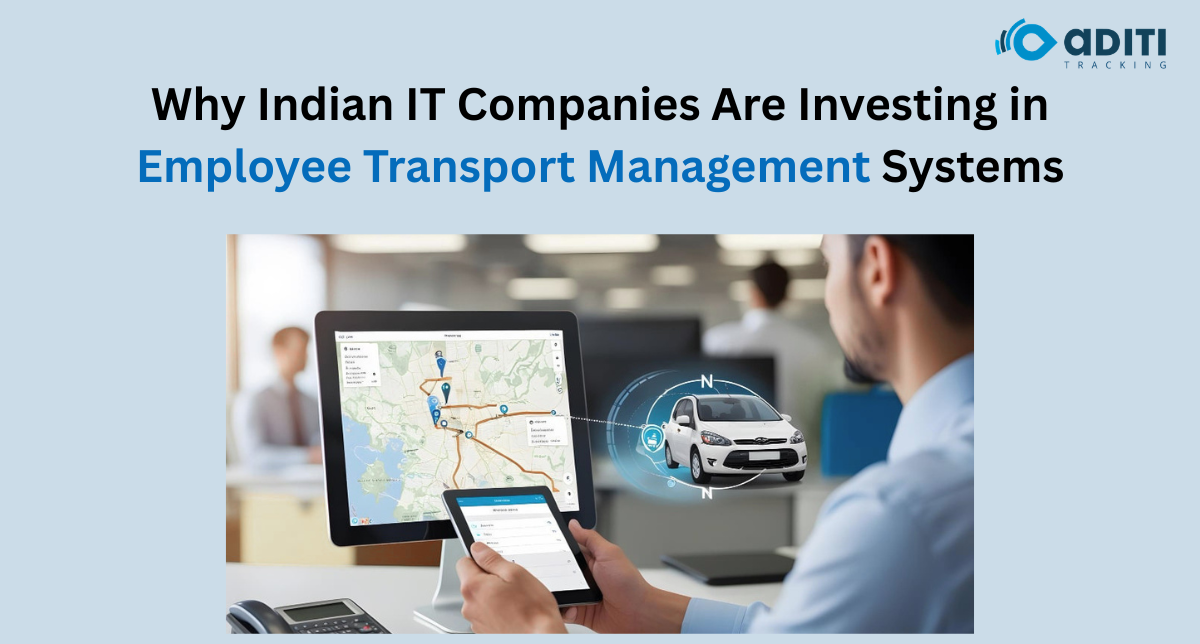
There is a problem that every mid-to-large IT company in India quietly carries. The office is ready. The talent is hired. But the moment a cab is late, a route is unaccounted for, or a night-shift employee does not reach safely, everything else stops mattering. That is where employee transportation management software stops being an operational expense and starts being a business decision.
The Shift Happened Quietly, But It Happened Fast
A few years ago, employee transport in Indian IT firms meant spreadsheets, a vendor on WhatsApp, and someone manually reconciling invoices at month-end. Most HR and admin teams were managed. Barely, but they managed.
Then something changed.
Workforce density increased. Many IT parks in Pune, Bengaluru, Hyderabad, and Chennai now operate 24×7 across multiple shifts. The number of employees needing transportation doubled in some cases. And the tolerance for ambiguity, especially at night, dropped to near zero after several high-profile safety incidents made national news.
Companies realized they were not managing transport. They were hoping it worked.
What Is Actually Driving The Investment
The decision to invest in employee transportation management software is not coming from IT leadership alone. It is coming from a combination of four pressures:
- Safety Compliance And Liability
Cab vendors operating without GPS, no real-time tracking, no SOS alerts. For IT companies with large female workforces on night shifts, that is not a gap. That is a liability. Government guidelines around employee transport safety, particularly for women, have made documentation and visibility non-negotiable in many states.
- Operational Costs Spiralling Out Of Control
Route inefficiency is quiet but expensive. When 40 cabs run near-identical routes because no one has visibility into seat occupancy or pickup clusters, the billing adds up fast. Companies that have moved to structured transport systems consistently report reductions in vehicle count per shift.
- Employee Satisfaction Scores
This one surprises most people. Transport experience ranks surprisingly high in employee Net Promoter Score surveys, especially in tier-1 cities with difficult commutes. Long waiting times, last-minute cab changes, and no real-time updates create friction before the workday even starts.
- Vendor Accountability Gaps
Without a system, IT admin teams are at the mercy of vendor-reported data. How many trips actually ran? Did the driver take the assigned route? Was the vehicle the one listed in the contract? Without real-time data, none of these questions have clean answers.
What The Right System Actually Changes On Ground
This is where the conversation gets specific.
Most IT companies do not need the most complex solution on the market. They need something that solves the three problems that cause the most pain:
- Real-time vehicle tracking so the employee knows exactly when the cab arrives and the admin knows if it deviated
- Automated route and seat optimisation to reduce the number of trips without increasing wait times
- Digital trip logs and reporting that remove the manual invoice reconciliation loop entirely
Beyond these three, there are features that matter depending on company size and shift structure. Panic/SOS buttons for night-shift employees. Female-only cab configurations. Integration with HRMS for automatic roster updates. Parent notifications for companies running school transport for employees’ children as part of benefits.
The point is employee transportation management software is not a single product. It is a category. And the difference between a basic GPS vendor and a proper transport management system is felt every single day by the admin team running it.
What It Companies Get Wrong When Evaluating Systems
Most procurement teams evaluate on price per vehicle per month. That is the wrong metric.
The right question is: how much visibility do we get, and how fast can we act on it?
A system that saves two unplanned cab deployments per week pays for itself. A system that removes one full-time admin role from the transport coordination loop is not a cost. It is an ROI.
There is also the matter of scalability. An IT company that has 2,000 employees today may have 5,000 in three years. Any employee transportation management software evaluation needs to account for that growth, not just today’s fleet size.
The Ground Reality In Indian It Campuses
Here is something worth saying plainly. The IT sector in India has invested significantly in office infrastructure, talent programmes, and digital tools for productivity. But the last-mile problem, getting employees from their homes to the office and back, safely and efficiently, still runs on systems built for a much smaller, simpler time.
The companies that are getting this right are not the ones that have the most sophisticated technology in every department. They are the ones that made a deliberate decision to treat transport as a managed function, not a delegated one.
That decision looks different from company to company. But it usually starts with the same realization: we cannot manage what we cannot see.
Conclusion
As workforce mobility becomes more complex across Indian IT ecosystems, companies are increasingly realising that transportation can no longer operate through fragmented coordination and reactive decision-making. Visibility, employee safety, route efficiency, and operational accountability are becoming essential parts of modern workforce infrastructure rather than secondary administrative functions.
Aditi Tracking’s Commutepulse helps enterprises modernise employee transportation operations through intelligent GPS tracking, route visibility, live fleet monitoring, driver accountability systems, and scalable transport management solutions designed for high-volume business environments.
From improving operational oversight to strengthening employee commute visibility, smarter employee transportation management software is becoming a critical part of how enterprises scale transportation operations more efficiently.
FAQs
1. What is employee transportation management software?
Employee transportation management software is a digital system that helps companies manage employee cab operations, route planning, vehicle tracking, driver coordination, safety monitoring, and transport reporting through a centralized platform.
2. Why are IT companies prioritising transport management systems now?
Indian IT companies are prioritising transport systems because hybrid work, night shifts, employee safety concerns, rising fuel costs, and operational inefficiencies have made manual transport coordination difficult to scale.
3. How does transport management software improve employee safety?
Modern transport systems improve safety through real-time GPS tracking, SOS alerts, route deviation monitoring, driver verification, and automated trip visibility for employees and administrators.
4. Can employee transport software reduce operational costs?
Yes. Employee transport software helps reduce unnecessary cab deployments, improves seat utilisation, optimises routes, and automates reporting, which lowers overall transportation and administrative costs.
5. What features should IT companies look for in a transport management system?
IT companies should look for features like live vehicle tracking, automated route optimisation, shift-based scheduling, HRMS integration, digital trip records, driver compliance monitoring, and employee mobile app support.

 Smart Fleet
 Cool Bus
 Clicktask
 CommutePulse
 Wastetrail