
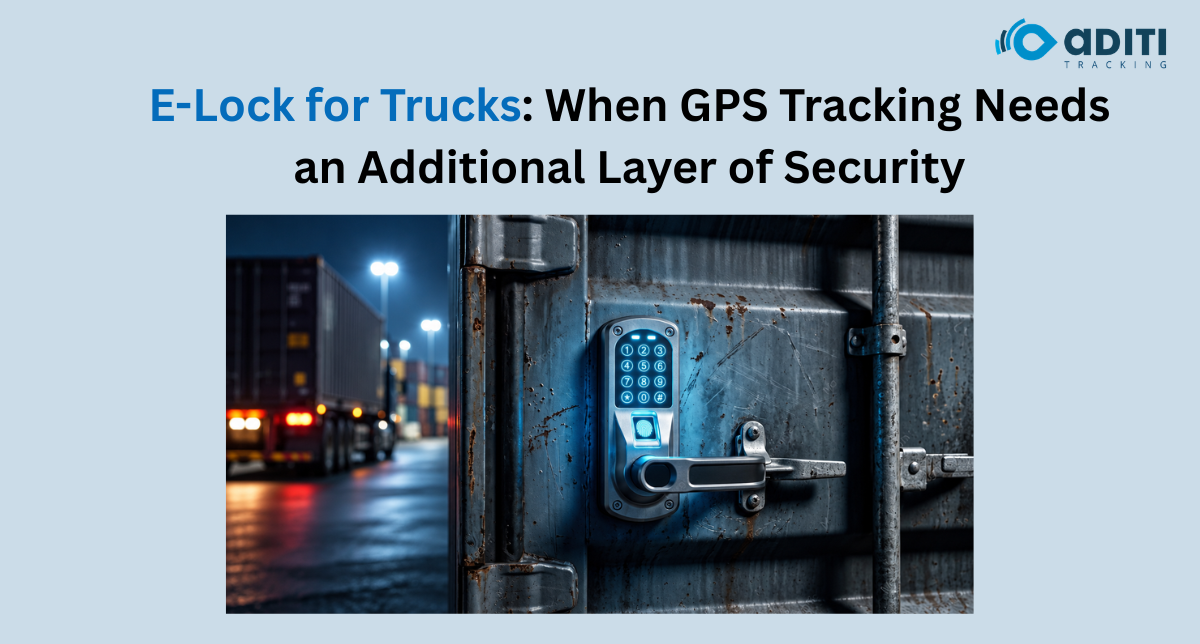
GPS tracking can tell a fleet manager where a truck is, but location visibility does not automatically mean the cargo itself is protected. For businesses moving valuable or sensitive goods, an E-Lock for truck can add another layer of control by helping secure the cargo access point during transit.
This distinction matters. Tracking the vehicle and controlling access to its cargo are two different requirements. A truck may follow the correct route and arrive on schedule, while the fleet operator still needs better visibility and control over when the cargo compartment is accessed.
The Truck Is Visible, But What About the Cargo?
Consider a truck carrying goods between a warehouse and a distribution centre.
The operations team can use GPS to monitor its location, route and movement. If the vehicle makes an unexpected deviation, the team may be able to identify it.
But another question remains:
Was the cargo compartment opened when and where it was supposed to be?
This is where vehicle tracking alone may not address every security requirement.
For businesses concerned about unauthorised cargo access, an electronic locking system provides a more direct layer of protection at the cargo access point.
Where Does an E-Lock Fit Into Fleet Security?
An E-Lock for truck is designed to electronically secure access rather than relying only on a conventional physical locking arrangement.
It should not be viewed as a replacement for GPS. The two technologies address different parts of fleet security.
GPS tracking focuses on the vehicle’s movement. An electronic lock focuses on controlled access to the cargo area.
That distinction becomes particularly relevant when trucks:
- Carry high-value goods
- Travel over long routes
- Make multiple stops
- Remain parked during a journey
- Move between warehouses and distribution points
- Carry goods where access control is important
The need will naturally vary by operation. A business transporting low-risk material over a short route may have different security requirements from one moving valuable inventory across several locations.
Why Can a Normal Lock Become a Weak Point?
Traditional locks are simple and familiar, but fleet managers may need more than physical locking for certain cargo movements.
The challenge is not simply whether the truck is locked when it leaves the warehouse. Businesses may also need greater control over cargo access throughout the trip.
Imagine a delivery journey with three approved unloading points. The truck itself may remain visible through GPS for the entire journey. However, fleet operators may still want a stronger system around access to the cargo compartment.
A Cargo E-lock adds an electronic security layer specifically around this part of the operation.
This can make it relevant for companies where cargo security needs to remain part of the monitoring process from dispatch to delivery.
When Does Combining GPS and E-Lock Make Sense?
Not every truck needs the same security setup. Adding technology without a clear operational reason can simply create unnecessary complexity.
A combined approach makes more sense when the risks justify it.
For example, a fleet manager might consider an E-Lock for truck when the business regularly deals with valuable cargo, controlled delivery points or routes where unauthorised cargo access is a serious concern.
Think of the two systems as answering separate questions:
GPS: Where is my vehicle?
Electronic lock: How is access to the cargo area being controlled?
For some fleets, knowing the answer to both questions provides a more complete approach to security than location tracking alone.
Cargo Security Should Start With the Actual Risk
Fleet security decisions work better when they begin with operational risks rather than technology.
Before introducing an electronic locking system, businesses should examine how their cargo actually moves.
Questions worth asking include:
- What type of goods are being transported?
- How valuable or sensitive is the cargo?
- How many authorised stops are involved?
- Who needs access to the cargo compartment?
- Where are trucks commonly parked during trips?
- Is a conventional lock sufficient for the level of risk?
- Does the business need an additional electronic layer?
The answers help determine whether a Cargo E-lock is necessary for a particular fleet, route or type of shipment.
More Security Does Not Mean Replacing Every Existing System
Electronic locks should be considered as part of a wider fleet security setup.
GPS tracking remains valuable because businesses still need visibility into vehicle location and movement. Physical security practices remain important as well. Driver procedures, route planning and clear rules around cargo access all contribute to reducing risk.
A Cargo E-lock adds another layer where businesses need tighter access control.
The objective is not to install as many systems as possible. It is to match the security setup to the actual value, movement and risk profile of the cargo.
Building a More Complete Approach to Truck Security
GPS has changed how fleets monitor vehicles, but some transport operations need protection beyond knowing where a truck is. Combining vehicle tracking with controlled cargo access can provide a more complete security approach for businesses handling higher-risk shipments.
Aditi Tracking offers GPS tracking solutions as well as electronic locks for fleet and cargo security requirements. Businesses looking for an additional layer beyond vehicle location monitoring can explore Aditi Tracking’s E-Lock solutions based on their fleet operations.
Carrying high-value cargo? Let’s find the right E-Lock setup.
Tell us your routes and the type of cargo you move, and our team will suggest what suits your fleet.
Get an E-Lock Quote or Call +91 96373 96373
FAQs
1. What is an E-Lock for a truck?
An E-Lock for truck is an electronic locking solution used to provide an additional layer of security for cargo access during transportation.
2. Is an E-Lock a replacement for GPS tracking?
No. GPS tracking and electronic locks serve different purposes. GPS provides vehicle location visibility, while an electronic lock helps control access to the cargo area.
3. When should a fleet consider a Cargo E-lock?
A Cargo E-lock may be useful when trucks carry valuable or sensitive goods, travel long routes, make multiple stops or require tighter control over cargo access.
4. Do all commercial trucks need electronic locks?
Not necessarily. Businesses should assess cargo value, routes, access requirements and security risks before deciding whether an electronic locking system is required.
5. Why combine GPS tracking with an electronic lock?
Combining the two addresses different security questions. GPS helps monitor where the vehicle is, while an electronic lock adds protection around access to the cargo compartment.


 Smart Fleet
 Cool Bus
 Clicktask
 CommutePulse
 Wastetrail