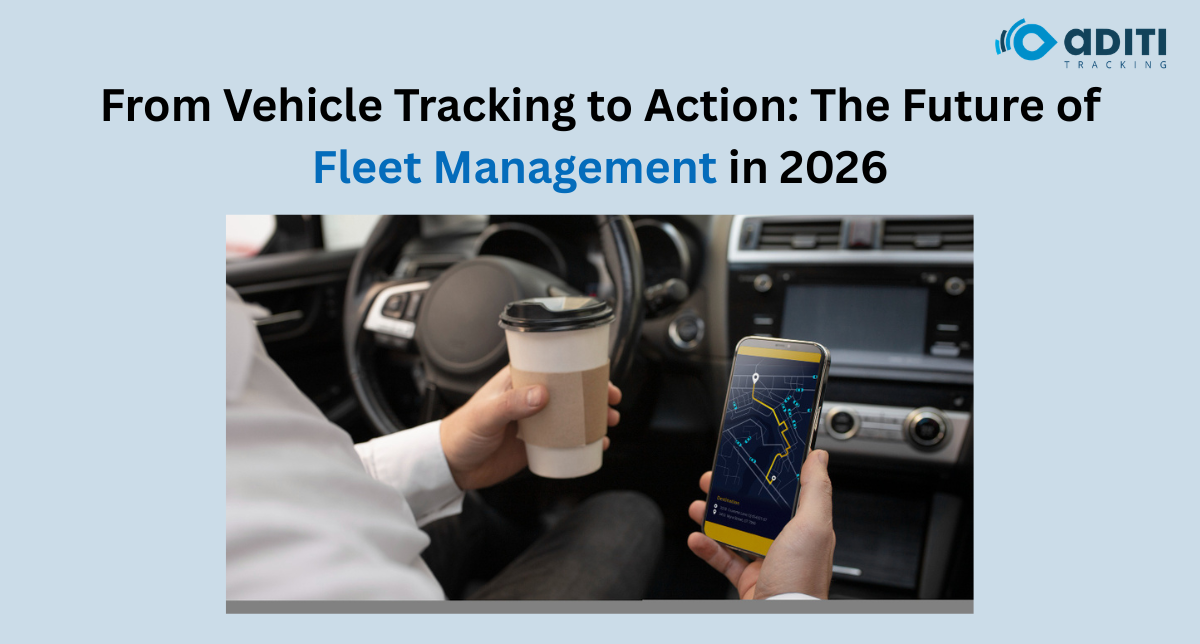
For a long time, fleet tracking revolved around one basic question: Where is my vehicle?
That information still matters. But for a fleet manager handling dozens or hundreds of vehicles, knowing that Truck 18 is travelling on a particular road is only the beginning. The more useful questions are what the vehicle is doing, whether something needs attention and what action the operations team should take next.
This is where GPS tracking fleet management is heading in 2026. The focus is moving beyond location visibility towards using vehicle data to support faster, better-informed operational decisions.
A Moving Dot Is Data, Not a Decision
Open a tracking dashboard and you may see every active vehicle displayed on a map.
That creates visibility, but visibility alone does not tell a manager whether operations are running efficiently.
Consider two vehicles travelling towards separate delivery locations.
Vehicle A is following its expected route and progressing normally. Vehicle B has been stationary for 35 minutes at an unexpected location.
Both appear on the map. Only one deserves immediate attention.
A useful fleet management gps tracking system should therefore help operators identify the exceptions hidden within routine vehicle movement.
The fleet manager should not have to watch every vehicle continuously to discover them.
Fleet Management Is Becoming Exception-Driven
The traditional approach can be highly reactive.
A customer calls because a delivery is late. The manager checks the vehicle. A driver reports a problem. The manager investigates. Someone notices unusual fuel consumption. The team starts looking through records.
A more effective approach is to identify meaningful deviations earlier.
Depending on the tracking capabilities being used, operators may monitor events such as:
- unexpected route deviations;
- prolonged stoppages;
- excessive idling;
- speeding events;
- unauthorised vehicle movement;
- geofence activity; and
- unusual operating patterns.
This is where fleet management vehicle tracking becomes more useful than simple location checking. The vehicle’s position gains meaning when viewed in the context of what the vehicle is expected to be doing.
Real-Time Information Matters Most When Someone Can Act on It
“Real time” is frequently treated as the end benefit of fleet technology.
It is not.
A fleet can have constantly updated information and still operate inefficiently if nobody knows how to respond to it.
Suppose a vehicle has remained idle significantly longer than expected. Seeing that information is useful, but operational value comes from what happens next.
Does the fleet manager contact the driver? Is there a customer delay? Has the vehicle developed a problem? Should another vehicle be reassigned?
GPS tracking fleet management for improving fleet efficiency depends on connecting information with decisions rather than simply collecting more data.
The Dashboard Should Tell You What Deserves Attention
Fleet managers already have enough information competing for their attention.
A dashboard filled with every ignition event, every stop and every minor change can quickly become another source of administrative work.
Sounds familiar? We’ve covered this exact problem in detail — A Fleet Dashboard with 50 Alerts Is Not Fleet Intelligence — including how to separate “immediate action” alerts from routine noise.
The better approach is prioritisation.
Think of fleet information in three levels:
Normal activity
Vehicles are operating within expected routes, schedules and conditions. The information should remain available without demanding constant attention.
Activity worth reviewing
Patterns such as repeated idling, recurring speeding or consistently longer stoppages may deserve periodic analysis.
Activity requiring action
Unexpected movement, major route deviation or another high-priority exception may require faster intervention.
A fleet management gps tracking system becomes more valuable when managers can focus on exceptions rather than manually supervising normal operations.
Historical Data Should Influence Tomorrow’s Decisions
Fleet tracking is not useful only while vehicles are moving.
Historical information can reveal operational patterns that are difficult to notice during a busy working day.
For example, managers may discover that:
- a particular route repeatedly produces long delays;
- certain vehicles experience more idle time than others;
- some locations consistently require longer stops;
- specific driving behaviours occur repeatedly; or
- actual fleet utilisation differs from assumptions.
This is where GPS tracking fleet management for commercial vehicles can support longer-term operational review.
The question changes from “What happened yesterday?” to “What should we change tomorrow?”
Cameras Can Add Context to Vehicle Data
Location data tells one part of the story. In some fleet situations, visual information can add useful context around road events or incidents.
A vehicle may show an unusual movement pattern in the tracking data. Relevant dashcam footage, where available within the deployed system, may help authorised teams understand the circumstances surrounding an event.
But more data is not automatically better.
Whether organisations use cameras, sensors or fleet management vehicle tracking, every additional information stream should have a defined operational purpose.
Otherwise, managers simply receive more information without gaining better control.
Curious what to look for in a fleet dashcam setup? Explore Aditi Tracking’s GPS Dashcam — see how video and location data work together.
Different Fleets Need Different Intelligence
A school bus operator, logistics company and construction fleet may all use GPS, but they do not need identical information.
For school transport, route visibility and scheduled movement may be central.
For logistics operations, stoppages, route deviations and vehicle utilisation could matter more.
For construction fleets, equipment movement and location across worksites may be particularly relevant.
That means GPS tracking fleet management for commercial vehicles should reflect the actual operating model rather than forcing every business into the same monitoring process.
Fleet Efficiency Is Often About Small Exceptions at Scale
One vehicle idling unnecessarily for several minutes may seem insignificant.
Repeated across a large fleet, every working day, small inefficiencies can accumulate.
The same applies to route deviations, excessive stoppages and underutilised vehicles.
This is why GPS tracking fleet management for improving fleet efficiency should focus on patterns as well as individual incidents. The objective is to identify where everyday operations repeatedly move away from what the business expects.
The Next Question Is More Important Than the Vehicle’s Location
Knowing where vehicles are remains fundamental. But the direction of GPS tracking fleet management is towards making location data more actionable. The strongest operational value comes when businesses can identify exceptions, understand patterns and decide what requires attention.
Aditi Tracking provides GPS tracking and fleet management solutions designed to improve visibility across commercial vehicle operations. Businesses can explore Aditi Tracking’s fleet tracking solutions according to their vehicle monitoring and operational requirements.
FAQs
1. What is GPS fleet management?
GPS fleet management uses vehicle location and related tracking information to help organisations monitor and manage fleet operations.
2. How does GPS tracking help improve fleet efficiency?
GPS tracking can provide visibility into routes, stoppages, idling, vehicle movement and other operational patterns that managers can review when identifying potential inefficiencies.
3. Can GPS fleet tracking show vehicle history?
Depending on the tracking solution, historical vehicle information can help managers review previous journeys, routes and operating patterns.
4. Is fleet tracking useful for small commercial fleets?
Yes. Smaller fleets can also benefit from improved visibility when managing multiple vehicles, drivers, routes or customer commitments.
5. What should businesses look for in a fleet management GPS tracking system?
Businesses should consider their operational requirements, location visibility, relevant alerts, reporting capabilities, usability and whether the system provides information that their fleet team can practically act upon.



 Smart Fleet
 Cool Bus
 Clicktask
 CommutePulse
 Wastetrail