
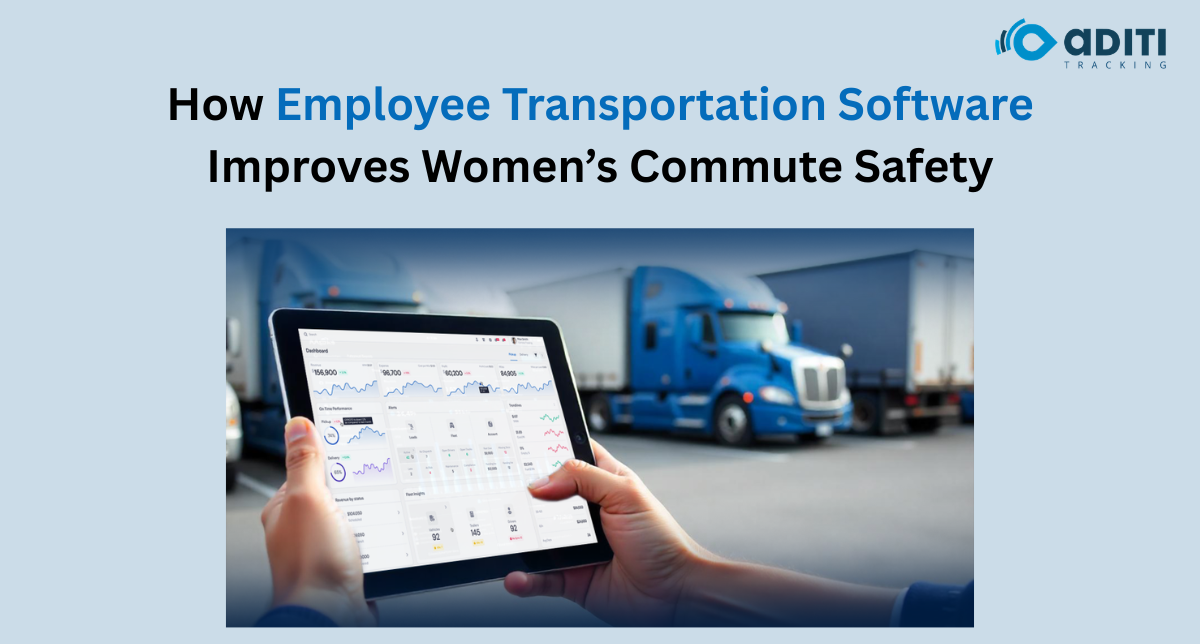
Night shift ends at 2 AM. A female employee walks out of the office, gets into a cab she has not seen before, driven by someone she has never met, heading home on a route nobody in her organisation is tracking. She sends a “left the office” message on the family group and hopes for the best. This is not an exceptional situation.
For lakhs of women working in IT, BPO, and corporate roles across Indian cities, this is Tuesday. The question for employers is no longer whether safety matters. It is whether their employee transportation software is actually built to address it.
What “Safe Transport” Means On Paper Versus On Ground
Most organisations have a transport policy. It covers vendor empanelment, vehicle specifications, driver background checks, and escalation contacts. Written well, it reads like a thorough document.
Then a cab breaks down at midnight on the outer ring road. Or a driver takes an unfamiliar route with no explanation. Or an employee is dropped last on a multi-stop route, alone in the vehicle, well past the expected time.
No policy document covers these moments. What covers them is real-time visibility, automated alerts, and a system that does not require the employee to advocate for her own safety while sitting in a moving vehicle at 1 AM.
That is a fundamentally different ask from a compliance checklist. And it is why employee transportation software built with safety features is not a premium add-on for large enterprises. It is a baseline requirement for any organisation with women on late-night shifts.
The Features That Actually Move The Needle On Safety
Not all transport systems are built with the same priorities. When evaluating what genuinely addresses women’s commute safety, the features that matter are specific:
- Live trip tracking visible to a designated contact – Not just the admin dashboard, but a shareable link or family notification so someone outside the office knows where the cab is in real time.
- SOS or panic alert functionality – A single tap that alerts the transport coordinator and designated emergency contact simultaneously, with the employee’s location at that moment.
- Geofence deviation alerts – If the cab leaves the assigned route by more than a defined distance, the system flags it immediately without waiting for the employee to raise an alarm.
- Last-drop verification – Confirmation that the employee has been dropped at their registered home location, not left mid-route due to route reshuffling or miscommunication.
- Driver identity visibility – Employee can see the assigned driver’s name, vehicle number, and photo before the cab arrives, removing the uncertainty of getting into an unfamiliar vehicle.
Each of these features addresses a specific gap that manual transport management leaves open. Together, they shift the safety burden away from the employee and onto the system.
Why This Is Now A Business-Level Issue, Not Just An Hr Concern
There are two ways to look at women’s commute safety. The ethical case is obvious and does not need elaboration. The business case is equally real and worth stating plainly.
Companies that cannot demonstrate structured, technology-backed safety protocols for night-shift women employees are increasingly finding it difficult to retain female talent in competitive hiring markets. The question “What does your late-night transport system look like?” is being asked in offer-stage conversations with a regularity that HR teams were not seeing five years ago.
Beyond retention, there is the legal dimension. State-level guidelines in several Indian states now require employers to ensure safe transport for women employees working beyond certain hours. Documentation of that safety, the routes taken, the drop confirmations, and the trip logs requires exactly the kind of audit trail that structured employee transportation software produces automatically.
A WhatsApp thread does not produce an audit trail. A spreadsheet maintained by a coordinator does not either.
The Gap Between Having A Transport Vendor And Having A Transport System
This is the distinction that matters most.
A vendor provides vehicles. A system provides visibility, accountability, and response capability. Many Indian organisations have the former and believe they have the latter. They do not find out the difference until something goes wrong.
Investing in employee transportation software that addresses women’s safety specifically is not about distrust of vendors. It is about ensuring that the organisation’s duty of care does not depend entirely on a vendor’s goodwill on any given night.
Aditi Tracking’s Commutepulse Is Designed For This
Aditi Tracking’s CommutePulse handles the real-time tracking, route monitoring, and live visibility that women’s commute safety requires in corporate transport. If your organisation runs late-night shifts and is still relying on manual coordination, it is worth a direct conversation about what structured transport management can change.
FAQs
1. Why is women employee safety important in corporate transportation?
Women employees safety is critical because many employees travel during late-night or early-morning shifts, where lack of visibility, route monitoring, and emergency response systems can increase security risks during commutes.
2. How does employee transportation software improve women’s safety during office commutes?
Employee transportation software improves safety through live GPS tracking, SOS alerts, route deviation monitoring, driver verification, and automated drop confirmation systems that provide real-time visibility throughout the trip.
3. What is an SOS feature in corporate transport systems?
An SOS feature allows employees to instantly alert transport coordinators and emergency contacts during unsafe situations while sharing their real-time location for faster response and intervention.
4. Why are route deviation alerts important for employee transport safety?
Route deviation alerts notify administrators when a cab moves away from its assigned path, helping organizations detect unusual movement patterns and respond quickly if a safety concern arises.
5. What should companies look for in a safe employee transportation system?
Companies should look for features such as live trip tracking, driver identity verification, emergency alerts, geofencing, last-drop confirmation, audit-ready trip records, and real-time transport visibility for employees and administrators.


 Smart Fleet
 Cool Bus
 Clicktask
 CommutePulse
 Wastetrail