The attendance register on a sales manager’s desk is one of the most expensive lies in Indian business.
It says everyone showed up. It says everyone went where they were supposed to go. It says the day happened as planned. Nobody disputes it. It gets filed. And the cost of whatever did not actually happen gets absorbed somewhere, in a missed lead, an unvisited client, a target that came close but did not close.
April 1st is the one moment in the Indian business calendar when organisations actually stop to ask whether their systems are working. New financial year. New budgets. New performance expectations. It is also, if you are paying attention, the right moment to ask a harder question: are we tracking our field workforce with any real accuracy, or are we just collecting signatures?
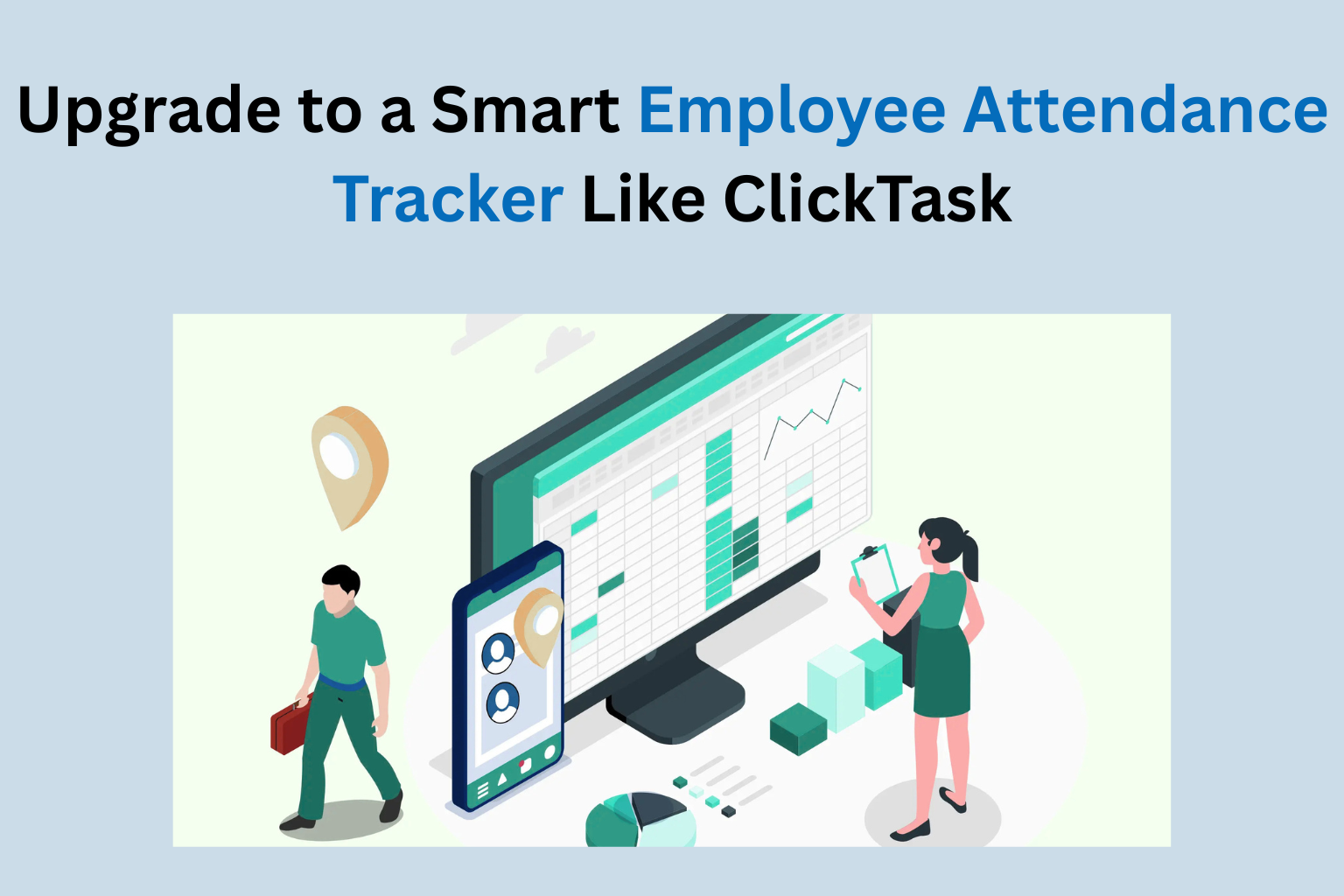
A proper employee attendance tracker, one that tells you where people actually are, not just whether their name appeared on a list, changes what you can see. And what you can see, you can manage.
The field workforce problem that nobody talks about honestly
Most Indian businesses with field teams have a version of the same problem. The team is large enough to be difficult to manage in person. Small enough that dedicated tracking infrastructure feels like overkill. So the organisation ends up with a compromise: WhatsApp check-ins, Excel sheets updated at end-of-day, and a general policy of trusting people until something goes wrong.
This works. Until it does not.
The trouble is not dishonesty. Most field staff are not gaming the system. The trouble is opacity. When a manager cannot see where their team is during the day, they lose the ability to course-correct in real time. A missed client visit is only discovered at the end of the week. A coverage gap in a key territory shows up in monthly numbers, not daily dashboards. By the time the data arrives, the window to fix anything has closed.
What the new financial year actually resets
April is not just an accounting date. For most Indian organisations, it is when headcount decisions, territory assignments, and incentive structures get revised. New joiners come on board. Existing staff move roles. Some accounts change hands.
Each of these changes creates a short window where oversight slips. New people do not know the routes yet. Managers are distracted with onboarding. The informal accountability systems that held things together, the regional manager who knew every distributor personally, the sales lead who called every rep at noon, do not transfer automatically to new team structures.
This is precisely when a reliable employee attendance tracker with real-time location data matters most. Not because your team cannot be trusted. Because the transition period is when gaps appear, and gaps uncaught in April become habits by June.
What ClickTask is and what it actually does
ClickTask is Aditi Tracking’s field workforce management platform. It was built for businesses that have people working outside an office, sales teams, service technicians, delivery personnel, field executives, who need to be tracked, tasked, and accounted for without turning management into surveillance.
The distinction matters. There is a version of workforce tracking that feels punitive. ClickTask is not that. It is a coordination tool. Here is what it does in practice:
- Live location tracking during work hours, Managers see where each field executive is on a map, in real time. Not check-ins at predetermined times. Actual location, updated continuously.
- Geo-tagged attendance, When a field rep marks attendance, it captures their GPS coordinates. The system knows if they were at the office, at a client location, or somewhere else entirely.
- Client visit verification, ClickTask logs when a rep reaches a designated location and when they leave. Visit duration is recorded. No more end-of-day reports written from memory.
- Task assignment and completion, Managers can assign tasks to field staff through the app. Staff acknowledge, complete, and close tasks. The audit trail is automatic.
- Expense and report submission, Field reps submit expense claims and daily reports through the same platform. Everything timestamped, everything geotagged.
- Coverage analytics, Over time, the data reveals which territories are being visited regularly and which are being neglected. Pattern visibility that was never available from manual reports.
The thing most managers underestimate
The value of real-time location data is not what it catches. It is what it prevents.
Field teams that know their movements are visible tend to structure their days differently. Not because they fear punishment, because the ambiguity of “where should I go today” gets replaced by a clear expectation. The data creates accountability without requiring a manager to enforce it manually. That is a different kind of culture.
Why April is the right moment to make this change
There is a practical reason to upgrade systems at the start of the financial year rather than mid-cycle. Data continuity.
If you implement an employee attendance tracker in October, you have two different sets of records for the same year, the manual records from April to September, and the digital records from October onward. Reconciliation is painful. Trend analysis is unreliable. Reports to senior management require footnotes.
Starting in April means the entire FY2026 data lives in one system. Attendance patterns, visit frequency, territory coverage, task completion rates, all of it comparable month to month, exportable for appraisals, and ready for the performance reviews that will happen next March.
There is also a signalling effect. Changes made at the start of the year read as policy. Changes made mid-year read as reaction. One sets expectations. The other manages crises.
A few things tend to happen in organisations that start FY26 with ClickTask:
- Field managers spend less time chasing updates and more time coaching their teams
- Territory coverage gaps show up within weeks, not quarters
- Expense claim disputes reduce because every claim has a location stamp
- New joiners onboard into a structured accountability system from day one, rather than learning informal workarounds
The cost of staying with what you have
Manual attendance systems have a cost that never appears in any budget line. It is the cost of uncertainty.
When a field team operates on self-reported data, the organisation is making decisions based on a version of events that may be partially accurate. Route planning uses optimistic assumptions. Incentive payouts reward results without knowing if the activity was real. Performance management becomes subjective because there is no objective record to refer to.
None of this is catastrophic on its own. But across a team of fifteen, twenty, thirty field executives, across a full financial year, the accumulated cost of imprecise data is significant. In lost productivity. In wrong decisions. In the management time spent investigating what actually happened rather than deciding what to do next.
An employee attendance tracker like ClickTask does not just replace a register. It replaces a category of uncertainty that most organisations have simply learned to live with.


 Smart Fleet
 Cool Bus
 Clicktask
 CommutePulse
 Wastetrail